



Folding phones have rapidly grown from a curiosity to a well-defined niche of the smartphone industry.
It’s hard to believe, but it was barely more than five years ago that the original Samsung Galaxy Z Fold launched. Though more of a proof of concept at the time than a functional product, it was still enough to light a fire under other phone makers – and indeed Samsung itself – to refine the folding form factor into today’s ultra-premium handsets (think the Galaxy Z Fold 6, OnePlus Open, and Honor Magic V3).
While manufacturers have increased screen real estate and chiseled away at the thickness of these devices, they’ve declined to chisel away at their price tags. Booklet-style foldables typically launch at or beyond the $1,600 mark, while flip folding phones typically hover between $900 and $1,200. These prices are pushed higher than slab phone contemporaries thanks to the advanced engineering and typically premium internals that go into making a folding phone.
With that said, the general consensus seems to be that people don’t like spending massive amounts of money, and as we previously reported, the folding phone market is starting to feel a squeeze – perhaps as the novelty of this nascent niche wears off.
While manufacturers have increased screen real estate and chiseled away at the thickness of these devices, they’ve declined to chisel away at their price tags.
Apple is reportedly working on a folding phone, which by virtue of Cupertino’s massive clout and popularity will almost certainly keep the foldables market afloat when released – but this could be all the way out in 2027. For now, rumor has it that Samsung is working on a cheaper version of the Galaxy Z Flip to launch alongside the phone’s seventh generation – a Z Flip FE – which may indicate that phone makers are looking to expand the folding phone user base through lower prices.
However, while I do want to see cheaper folding phones eventually, I’m thoroughly unconvinced that now is the right time to start cutting costs on the most complicated devices this industry has ever seen – both for the phone makers and the customers that use them.
Buy cheap, buy twice
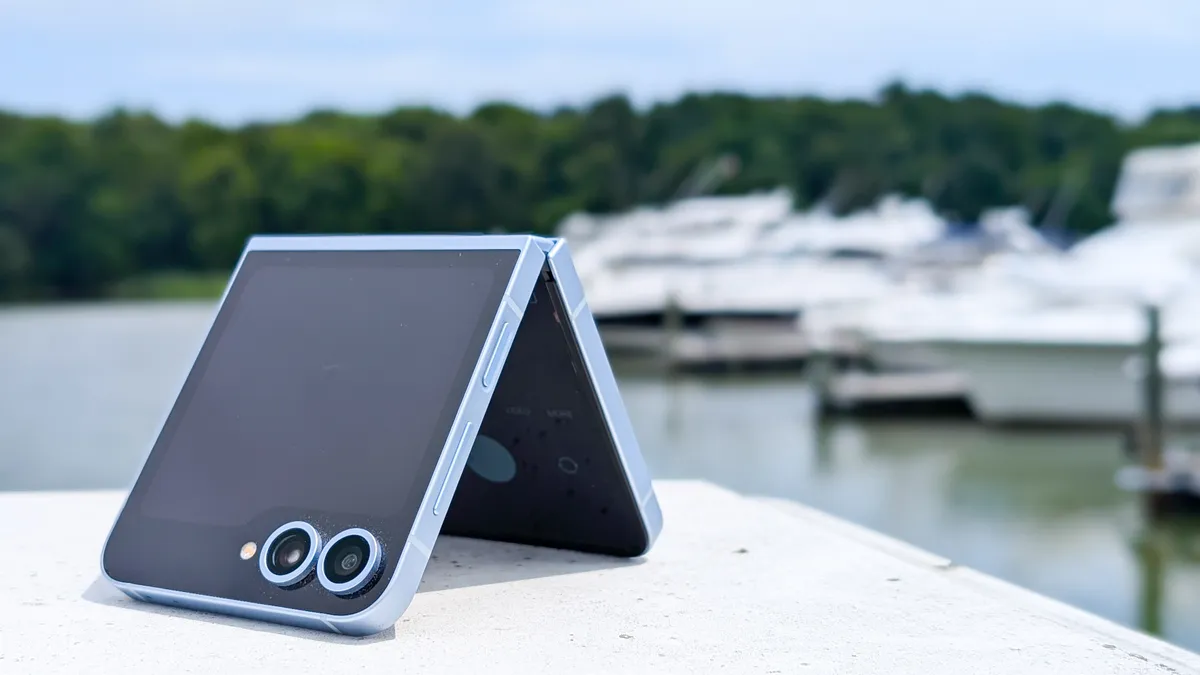
The best folding phones – the Z Fold and Z Flip, the Pixel 9 Pro Fold, and the OnePlus Open – are leagues more sophisticated than their earliest predecessors, but the evolution isn’t quite complete.
At identical price points, a slab phone will almost always have better specs than a folding phone – the segmented design of a folding phone means less space for camera tech and batteries, and the heavy resource cost of the hinge mechanism means there’s less to spend on other features. A slab phone is likely to have much better environmental protection, too, since a hinge can never be completely sealed.
I’m thoroughly unconvinced that now is the right time to start cutting costs on the most complicated devices this industry has ever seen.
This is all to say that even at the highest price tier, the home of cutting-edge tech and premium phones, there are clear and necessary compromises made to achieve the folding form factor. What concerns me about the idea of making a cheaper folding phone is just how far those compromises can be pushed before the user experience is noticeably degraded.
If you go out today and purchase a Galaxy Z Flip 6 at retail price, you’re paying $1,099 / £1,049 / AU$1,799 for a phone that performs about as well as the Galaxy S24, albeit with one less camera and a worse battery life. If the Z Flip offers roughly $799 / £799 / AU$1,399-worth of performance, how well can we reasonably expect a cheaper version to fare?

There’s a similar comparison to be made between the Galaxy S24 Ultra and Galaxy Z Fold 6 – despite being roughly one and a half times as expensive, the Z Fold simply can’t match the technical prowess the simpler and more mature slab phone format affords, with a lower-resolution camera system and smaller battery.
The efforts of rival phone makers to encroach on the low-end of the folding phone space are focused on the cheaper flip form factor; these efforts have also been beset with issues. The Xiaomi Mix Flip, for instance, costs as much as a Z Flip 6, but when I tried it had a seemingly flimsy hinge, while Motorola’s Razr lineup is troubled by genuinely awful AI (see our Razr Plus review) and poor durability.
To me, these are clear, empirical signs that more refinement is needed before phone makers start trying to pull folding phone prices down.
As it stands, the focus on the higher end of the price spectrum affords phone makers the resources to continue developing these outlandish, unique, and still decently experimental devices. I want to see folding phones reach a properly finished form before these companies start developing budget spin-offs.