



After years of rumors, Apple’s first foldable iPhone is real, but the company’s biggest news might be what’s happening on your wrist.
Apple’s fall event has become a predictable ritual — new cameras, a faster chip, incremental battery gains.
This year broke that pattern. The headline act, iPhone Duo, is Apple’s first folding phone, arriving years after Samsung, Google, and Huawei normalized the category. Apple rarely enters a market first, but when it does, it tends to reshape how the rest of the industry builds.
For buyers, the event presents a choice between Apple’s familiar Pro upgrades and riskier first-generation features, including folding hardware and more personalized health guidance.
iPhone Duo: Apple’s first fold
The star of the show is iPhone Duo, a foldable phone with a 7.6-inch inner display and a 5.4-inch outer screen, both sharing the same aspect ratio so content resizes without distortion. Closed, the device is about the size of a passport. When unfolded, Apple says it is the thinnest iPhone the company has built.
The company leaned on its hardware-and-software integration pitch to sell the idea. “iPhone Duo is the most transformational change to iPhone since the original,” said John Ternus, Apple’s CEO, adding that it “redefines what it means to use a foldable phone.”
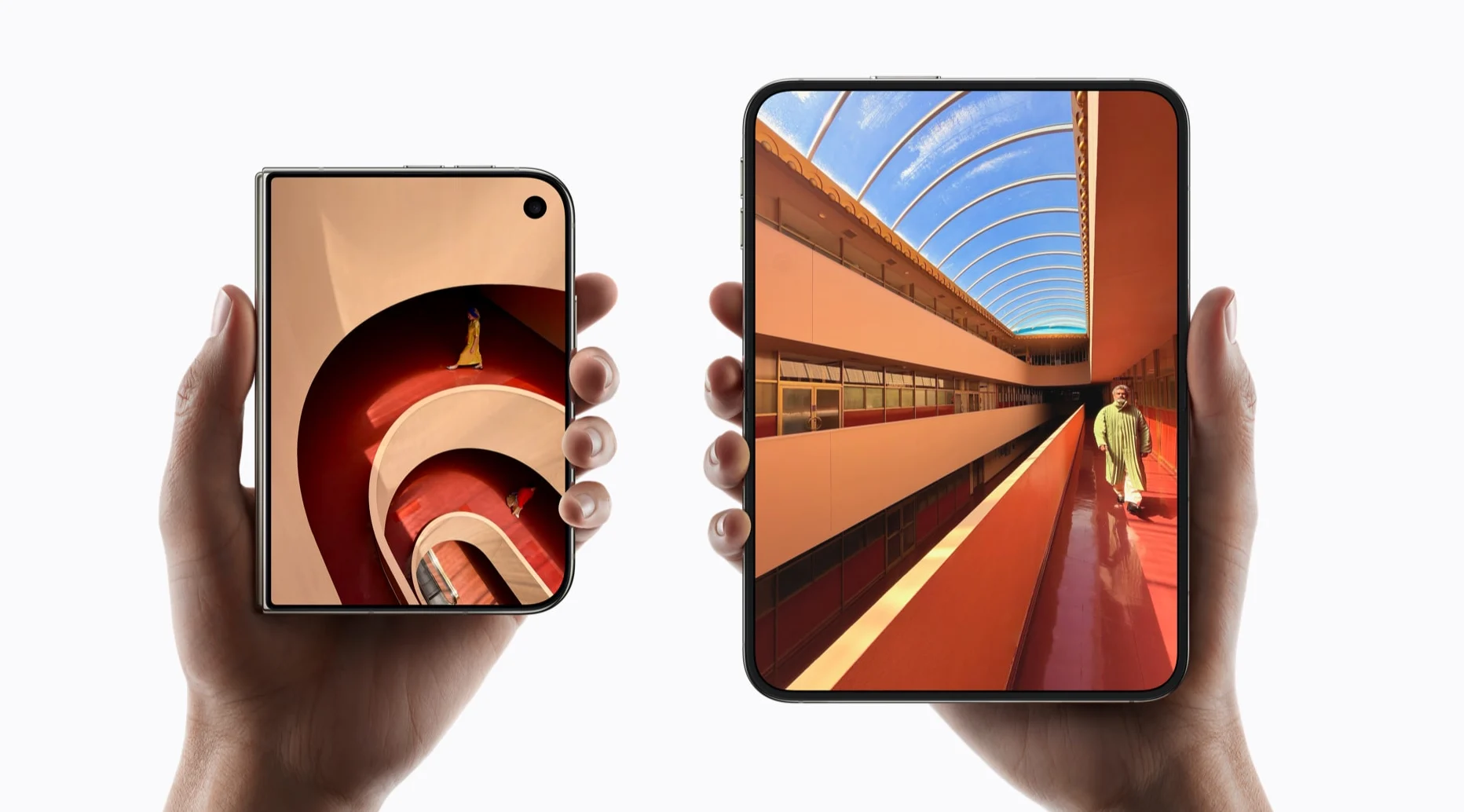
Underneath, iPhone Duo runs the new A20 Pro chip alongside a dual-battery setup and a custom vapor chamber for cooling — engineering Apple says is necessary to keep a folding phone running cool during gaming or heavy multitasking. The hinge itself is built from more than 100 components and is reinforced with a titanium frame, Ceramic Shield glass, and an IP68 water and dust rating, an apparent answer to durability concerns that have dogged folding phones since the format debuted.
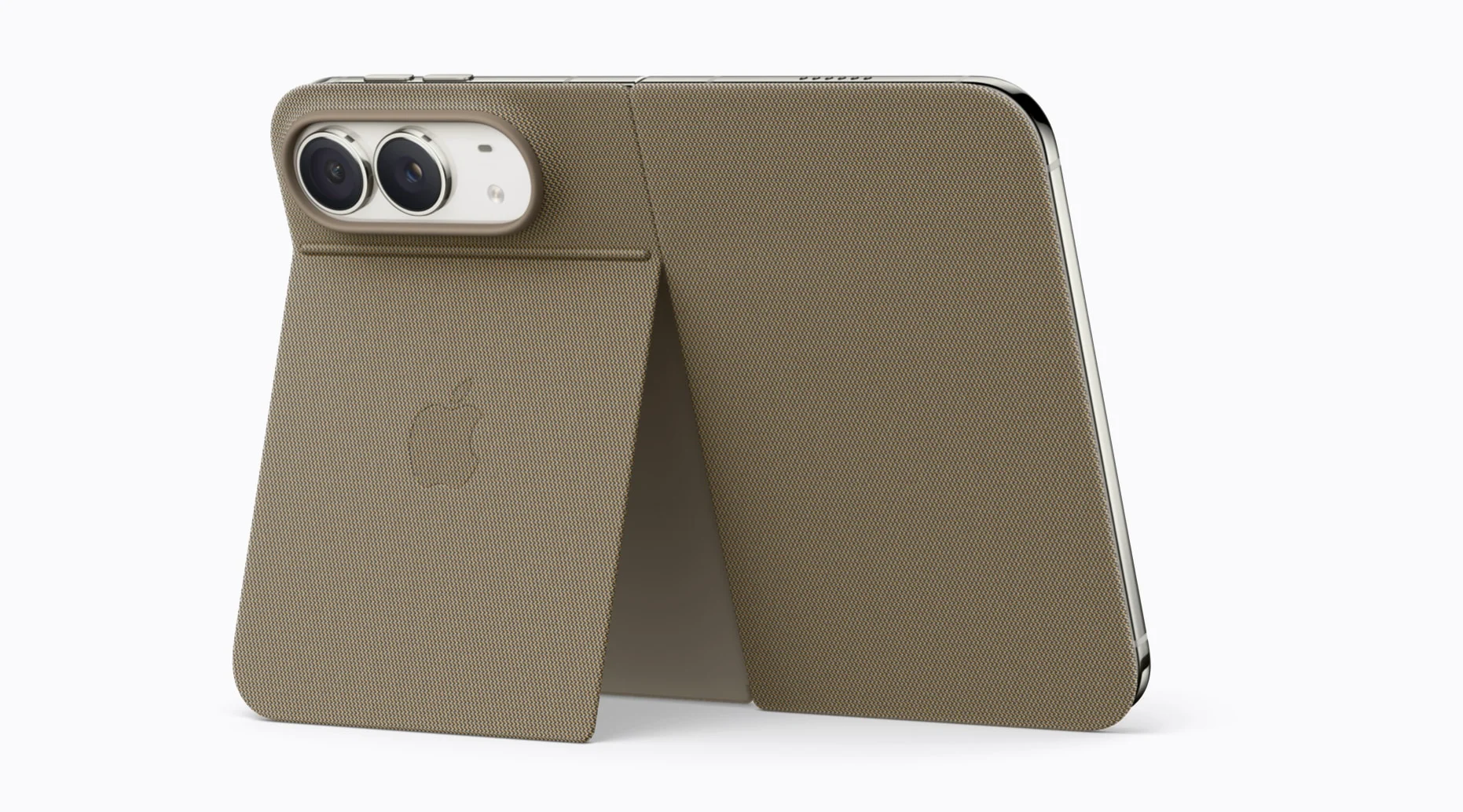
The camera system introduces tricks unique to the folding form factor. A feature called Smart Take uses on-device AI to snap a photo automatically when it detects subjects posing, while “Duo Preview” lets someone being photographed see a live preview on the outer screen. There’s even a nod to parents: “Kid Cue” plays Peanuts animations on the outer display to get toddlers to look at the camera.
Software has been reworked too. iOS 27 shifts navigation controls to the sides of both screens to preserve vertical space, and the phone supports Split View — the first time two apps can run side-by-side on an iPhone. When set down, iPhone Duo drops into an upgraded StandBy mode that turns it into a photo frame or widget hub.
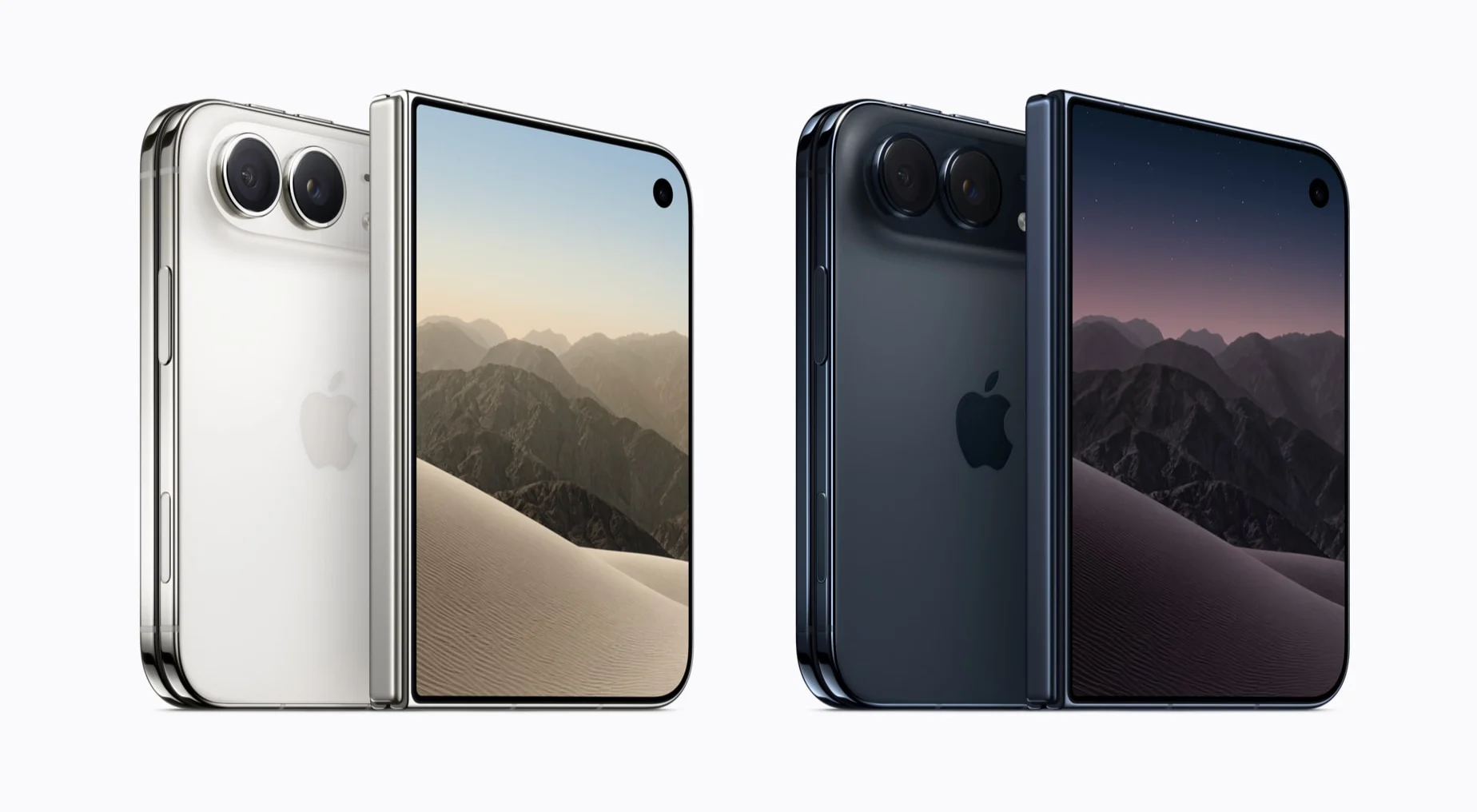
Battery estimates range from 24 to 44 hours of video playback depending on which screen is in use, and the phone charges to 50% in about 20 minutes wired. It ships eSIM-only, in star white and night sky finishes, starting at $1,999 for 256GB. Preorders open Oct. 16, with sales beginning Oct. 23.
What stands out: Apple chose a passport-like form factor rather than the taller, narrower design competitors have used. Its 5.4-inch outer display gives it a more compact shape than many book-style foldables, although its folded thickness and weight will determine its real-world pocketability.
iPhone 18 Pro and Pro Max: A camera that adjusts its own aperture
Apple’s traditional Pro lineup got its own significant upgrade: iPhone 18 Pro and Pro Max introduce variable aperture, a first for the iPhone. Six laser-cut blades physically open and close to adjust exposure and depth of field, a feature borrowed conceptually from professional cameras.
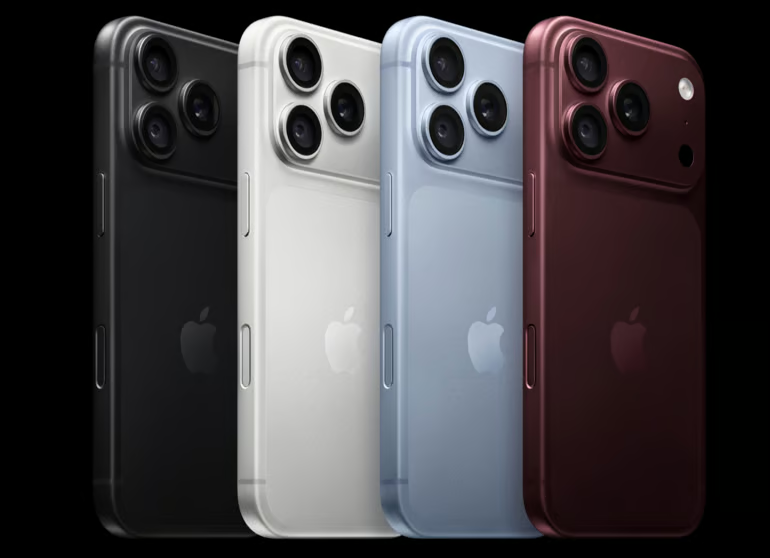
Greg Joswiak, Apple’s senior vice president of Worldwide Marketing, framed it as a democratizing move. “iPhone 18 Pro makes it easy for anyone to capture stunning photos and videos using variable aperture, while providing more versatility for creators and more control for pros,” he said.
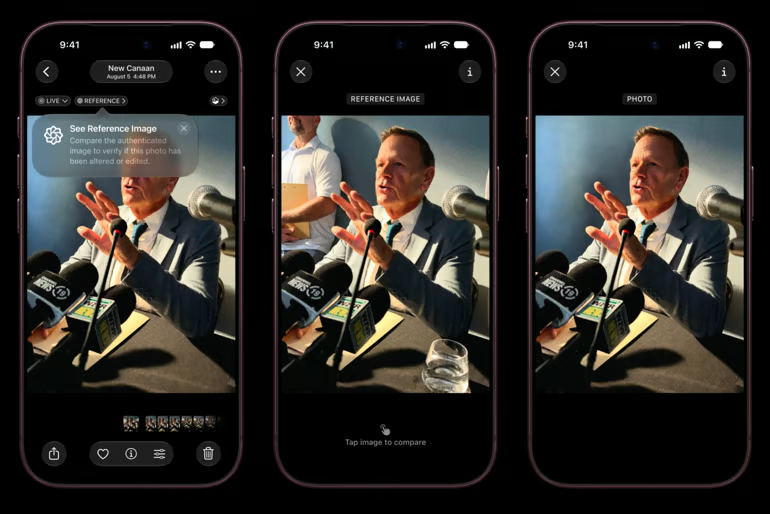
A new feature called Apple Reference Image works alongside the upgraded camera sensor to create what Apple describes as a tamper-evident “digital negative” for supported photos, aimed at addressing rising concern over AI-edited and fabricated images. Users can compare an edited photo against its untouched reference version directly in the Photos app.
Both phones get the same A20 Pro silicon as iPhone Duo, paired with a redesigned vapor chamber that Apple says delivers up to 40% better sustained performance than the previous generation. The Dynamic Island grows more useful too, now displaying up to three Live Activities simultaneously.
Battery life sees a notable jump — up to 45 hours of video playback on the Pro Max, which Apple calls the largest generational battery gain in iPhone history.
Both phones come in black, silver, glacier and a new burgundy finish. iPhone 18 Pro starts at $1,199; the Pro Max starts at $1,299. Preorders begin Sept. 12, with phones in stores Sept. 18 — five weeks ahead of iPhone Duo.
AirPods 5: Noise cancellation comes to the cheap earbuds
Apple also refreshed its entry-level earbuds, and this update matters more than it might sound. AirPods 5 bring Active Noise Cancellation across Apple’s entry-level open-ear lineup, expanding a feature previously available on the more expensive ANC version of AirPods 4 and the AirPods Pro line. Apple claims the new acoustic architecture blocks up to 50% more noise than the ANC-equipped AirPods 4.
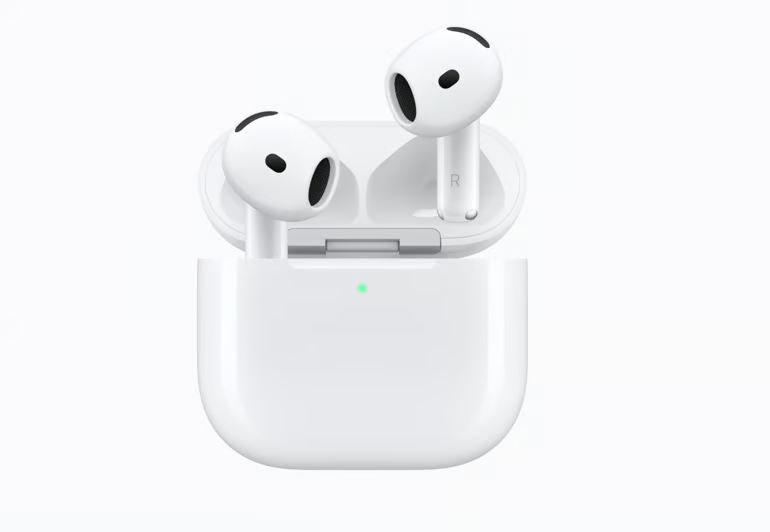
“We’re thrilled that with AirPods 5, we’re able to bring Active Noise Cancellation — one of our most beloved features — to our most affordable AirPods,” said Dave Pakula, Apple’s vice president of Hardware Engineering.
The earbuds also gain Live Translation and hands-free access to the newly announced Siri AI, letting users respond to prompts with a head nod or shake instead of touching the earbuds.
The standard AirPods 5 cost $129; a version with a wireless charging case and on-stem volume swipe control costs $149. Both are available to preorder now, arriving in stores Sept. 18.
Apple Watch Series 12: A sensor overhaul, not just a new case
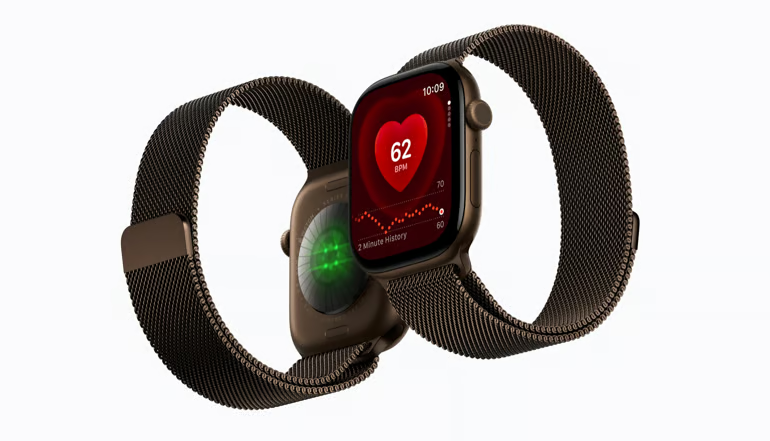
Apple Watch Series 12 introduces what the company calls a Health Sensing System — new optical and electrical heart sensors paired with the S11 chip that Apple says take background heart-rate measurements every five seconds throughout the day, more frequently than previous models outside workout sessions. Heart rate variability, a stress and recovery indicator, is now measured up to 24 times more often.
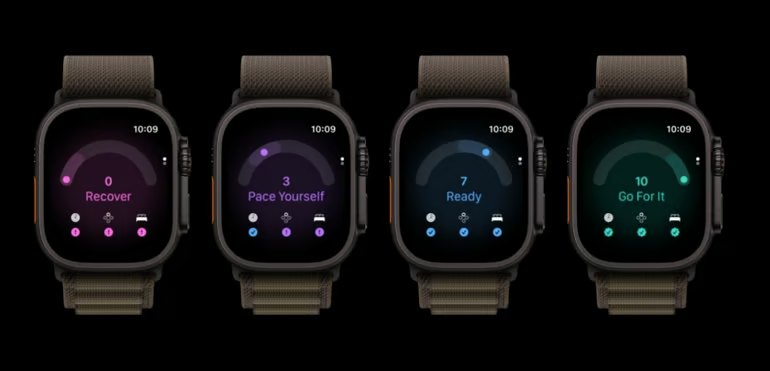
That data feeds into a new feature called readiness, a daily 0-10 score with a plain-language recommendation — Recover, Pace Yourself, Ready, or Go For It — based on recent activity, training load, vitals and sleep.
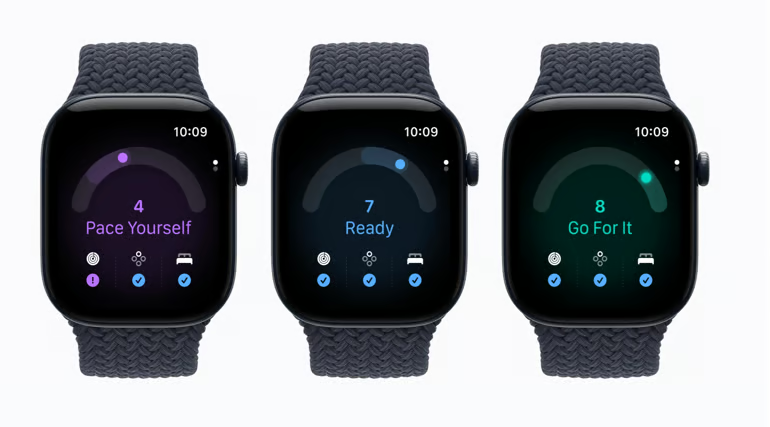
Kaiann Drance, Apple’s vice president of Worldwide Apple Watch Product Marketing, described it as a practical tool. “With our new Health Sensing System and S11 chip, Apple Watch Series 12 gives you meaningful insights, like readiness, so you can better understand how to take on your day and care for your health,” she said.
The watch also gains Audio Intelligence, a set of features that includes Live Rewind (replaying the last 15 seconds of nearby conversation as text), Siri Recap (auto-generated conversation summaries), and Sound Recognition for users who are deaf or hard of hearing. Apple says the audio is processed on the device and immediately deleted through a hardware-isolated component called Secure Exclave.
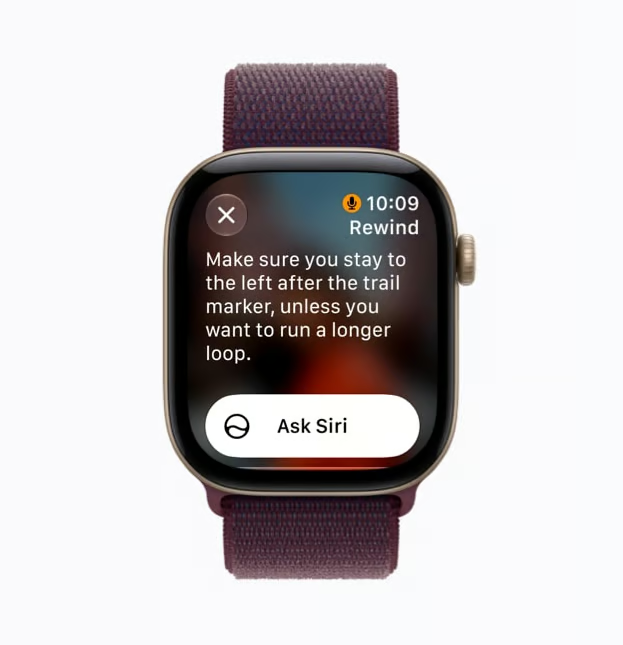
Apple Watch Series 12 comes in aluminum, titanium and a new ceramic option, starting at $399, with battery life up to 24 hours daily and 10 hours during outdoor workouts.
Apple Watch Ultra 4: More battery, same rugged mission
Apple’s adventure watch inherits the same Health Sensing System and S11 chip as Series 12, but pushes battery life further — up to 50 hours in daily use, and up to 45 hours in a new Max Extended Workout mode, which Apple says is enough to track a 100-mile race while still logging GPS every second.
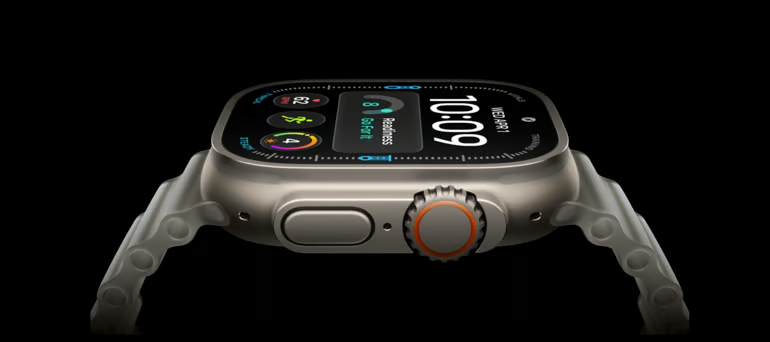
“The new Health Sensing System and S11 chip take Apple Watch Ultra 4 — our most rugged and capable Apple Watch — to the next level, delivering longer battery life, faster charging, and the most accurate heart rate sensing in a wearable,” Drance said.
Charging is faster too: 15 minutes now adds up to 18 hours of battery. The watch keeps its titanium build, in natural and black finishes, and starts at $799.
Redesigned Health App: An app that tries to explain you to yourself
Perhaps the least flashy but most ambitious announcement was a redesigned Health app coming to iPhone later this year. It adds a Longevity tab built around a new “Health Age” score, which compares a user’s Apple Watch metrics — VO2 max, resting heart rate, sleep, HRV — against their chronological age, with the option to add lab results like A1c and LDL cholesterol.
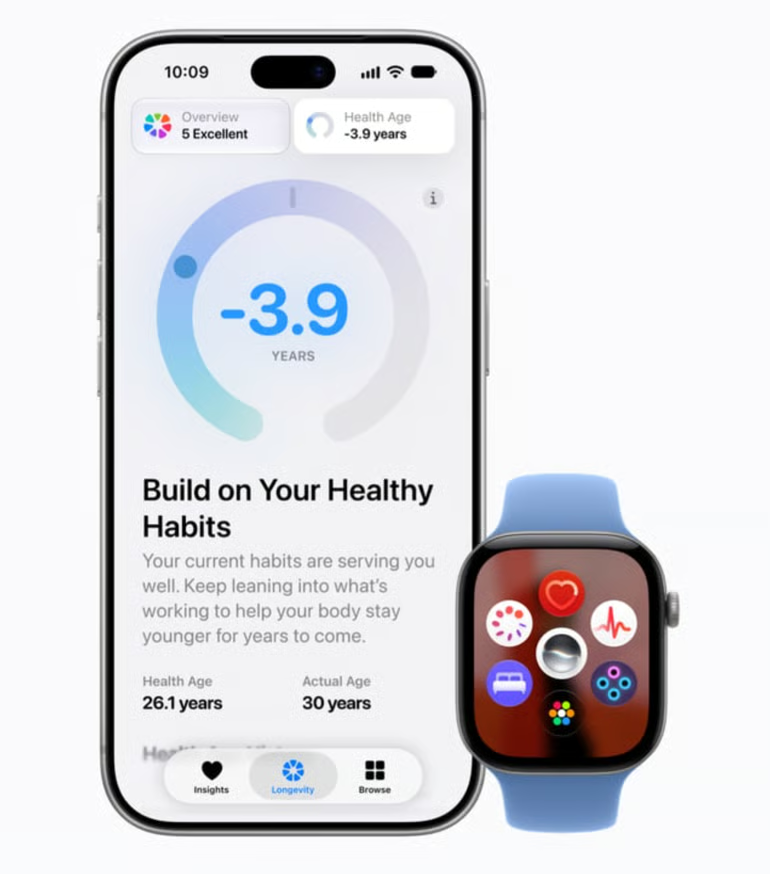
Dr. Sumbul Desai, Apple’s vice president of Health and Fitness, tied the update to Apple’s broader ambitions in preventive health. “By combining breakthrough sensing on Apple Watch with Apple Intelligence in the Health app, we’re able to translate complex biometric data into clear guidance for users,” she said.
The app will also let users book lab tests — more than 50 biomarkers for $119 — through roughly 2,000 Quest Diagnostics locations in the US, and run at-home “movement evaluations” using the iPhone’s camera to assess flexibility, balance and strength, with no video ever stored. Cycle Tracking is also expanding to formally support perimenopause and menopause, including notifications for users 40 and older whose logged cycle patterns suggest the transition may be starting.
Pricing and availability at a glance
- iPhone 18 Pro/Pro Max: From $1,199/$1,299; preorders begin Sept. 12, in stores Sept. 18
- AirPods 5: $129, or $149 with a wireless charging case; preorders open now, in stores Sept. 18
- Apple Watch Series 12: From $399; preorders open now, in stores Sept. 18
- Apple Watch Ultra 4: From $799; preorders open now, in stores Sept. 18
- iPhone Duo: From $1,999; preorders begin Oct. 16, in stores Oct. 23
- Redesigned Health app: Arriving later this year, initially in US English
What it means for buyers
For most people, the practical decision tree hasn’t changed much: iPhone 18 Pro and Pro Max remain the sensible high-end choice, with faster performance, longer battery life and a genuinely useful new camera aperture system.
iPhone Duo is a bet on the future of the format — appealing to people who want a tablet-sized screen that fits in a pocket, but it carries the uncertainties surrounding any first-generation folding device, including display creasing and long-term hinge durability, and a price tag $800 higher than the standard Pro Max.
Apple’s durability claims — titanium frames, reinforced glass, IP68 resistance — address concerns raised by earlier folding phones from other manufacturers, but only years of real-world use will confirm whether the hinge holds up.
On the health side, the readiness score and Health Age feature are genuinely useful additions for people who already obsess over recovery metrics, but they also push Apple Watch further into health interpretation and wellness guidance, inviting greater scrutiny of data privacy and the accuracy of recommendations users may treat as medical advice.
For buyers, the safest upgrades are the established iPhone Pro and Apple Watch lines. The Duo offers the most significant change, but its $1,999 price and untested long-term durability make it a device worth evaluating after independent reviews rather than buying on Apple’s specifications alone.
Read more: Apple’s appointment of John Ternus as CEO signals how AI, hardware, and new device categories could shape the company’s next era.