


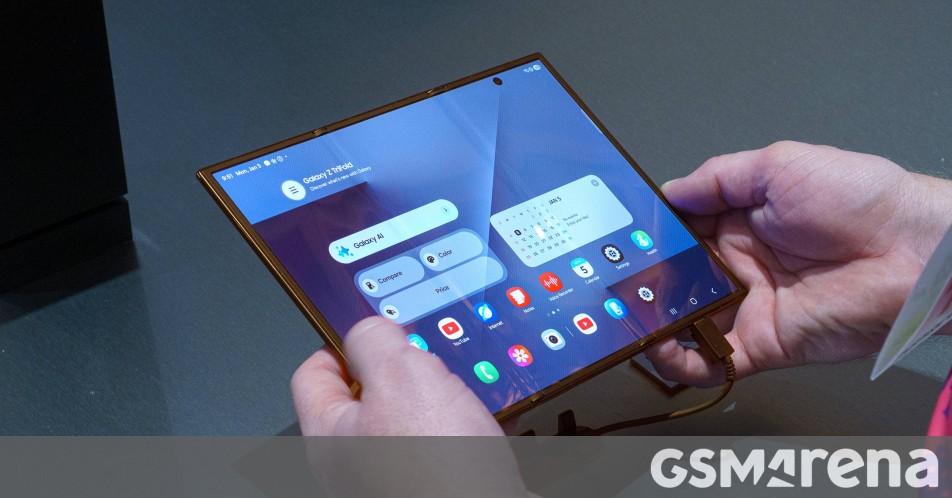
The Samsung Galaxy Z TriFold is very exclusive and will likely remain like that – it’s on sale in South Korea, China, Taiwan, Singapore, and the UAE, and is expected to arrive Stateside soon.
But we managed to spend some time with one at this year’s CES and we have some early thoughts to share.
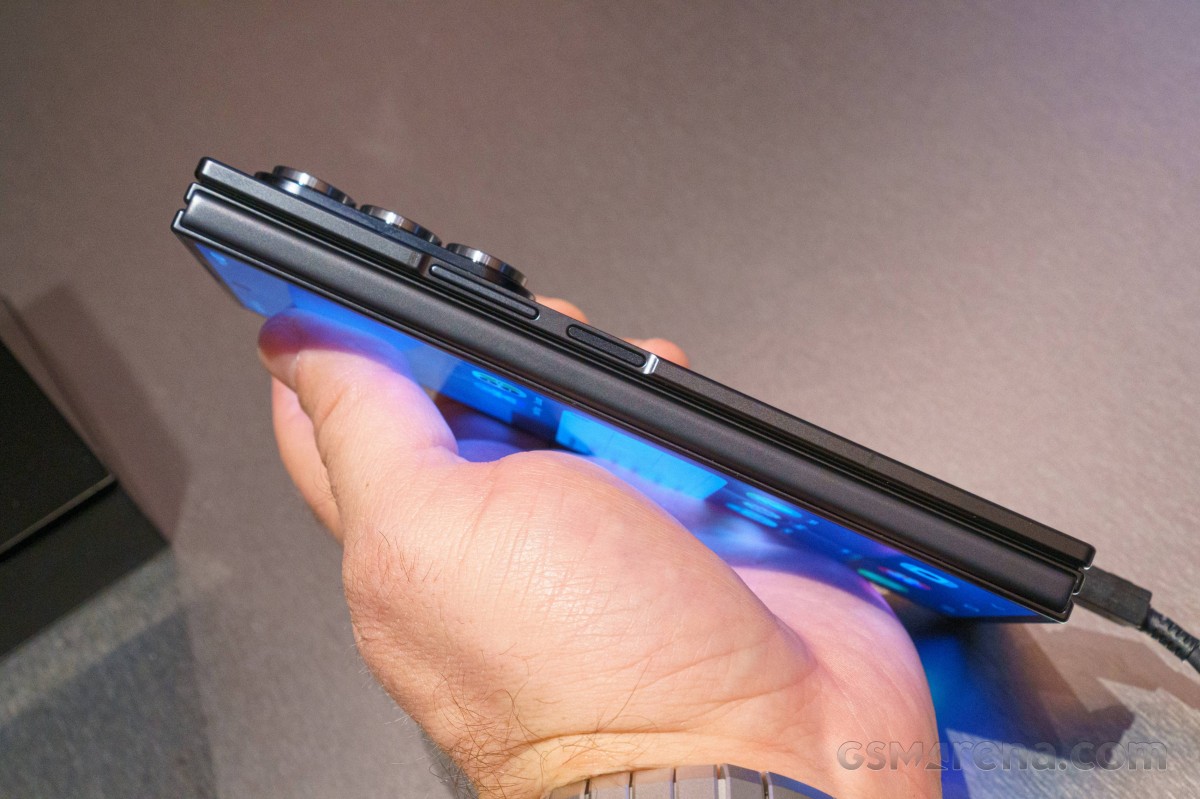
Compared to modern phones, especially recent ones, it’s quite the brick when folded. There’s no getting around that – having two folding sides and one middle one means the Galaxy Z TriFold will be a fat gadget when fully closed.
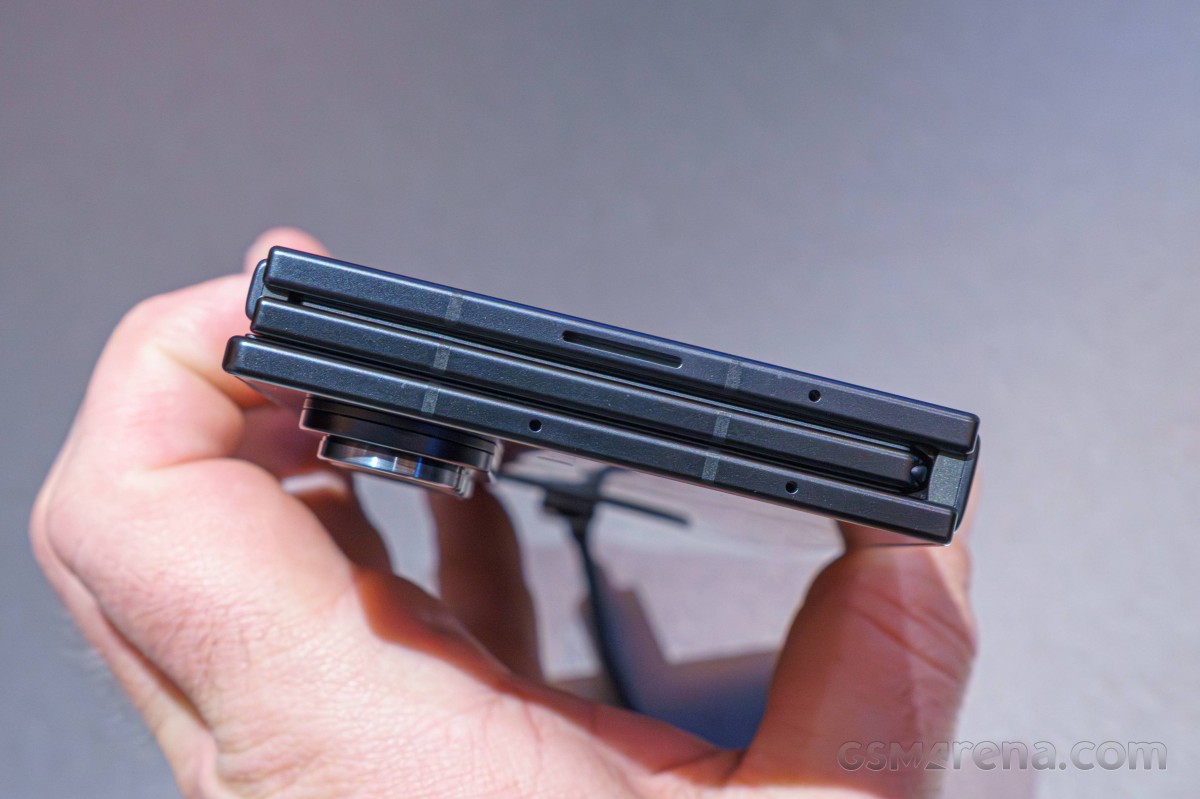
However, it’s not unmanageably thick, and people who’ll buy the TriFold will likely accept the girth for the benefits they’ll get when they unfold the device. After all the Galaxy Z TriFold is thinner than the Galaxy Z Fold5 and that was perfectly acceptable two years ago. Also goes to show the engineering masterclass the Samsung engineers pulled off with the TriFold.
Using the TriFold when folded
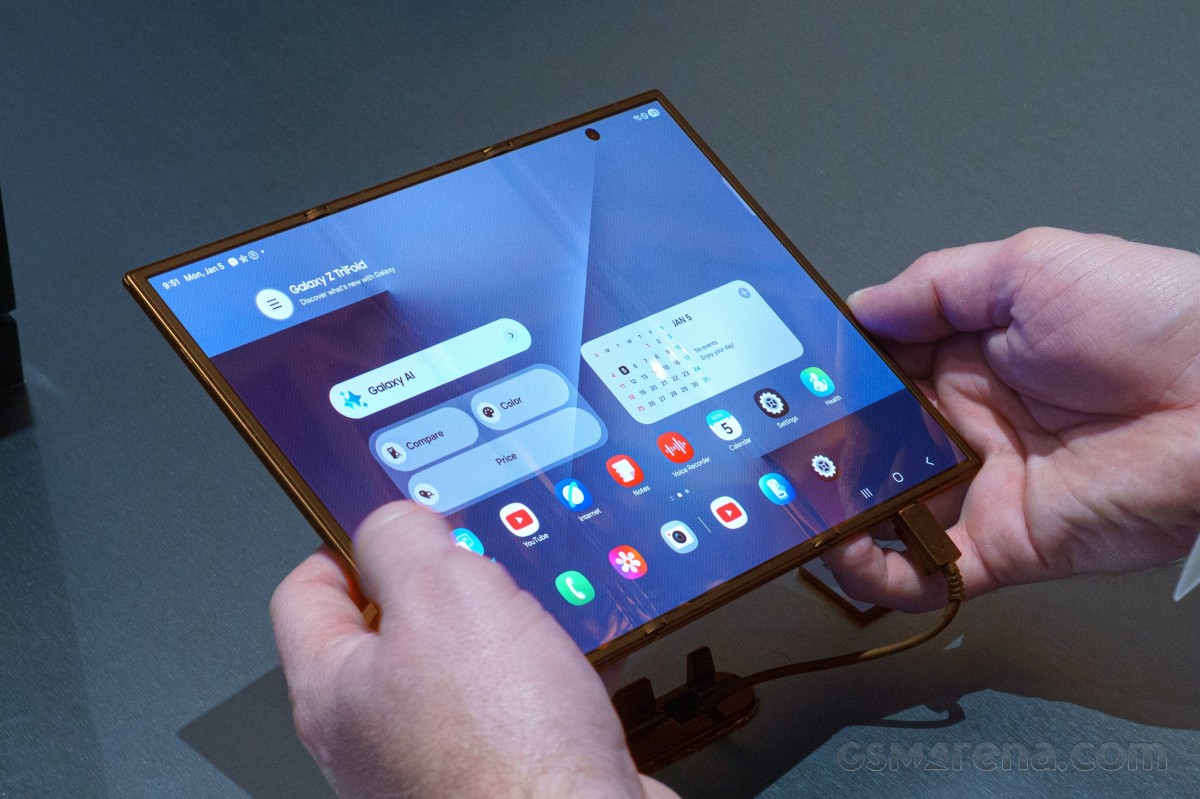
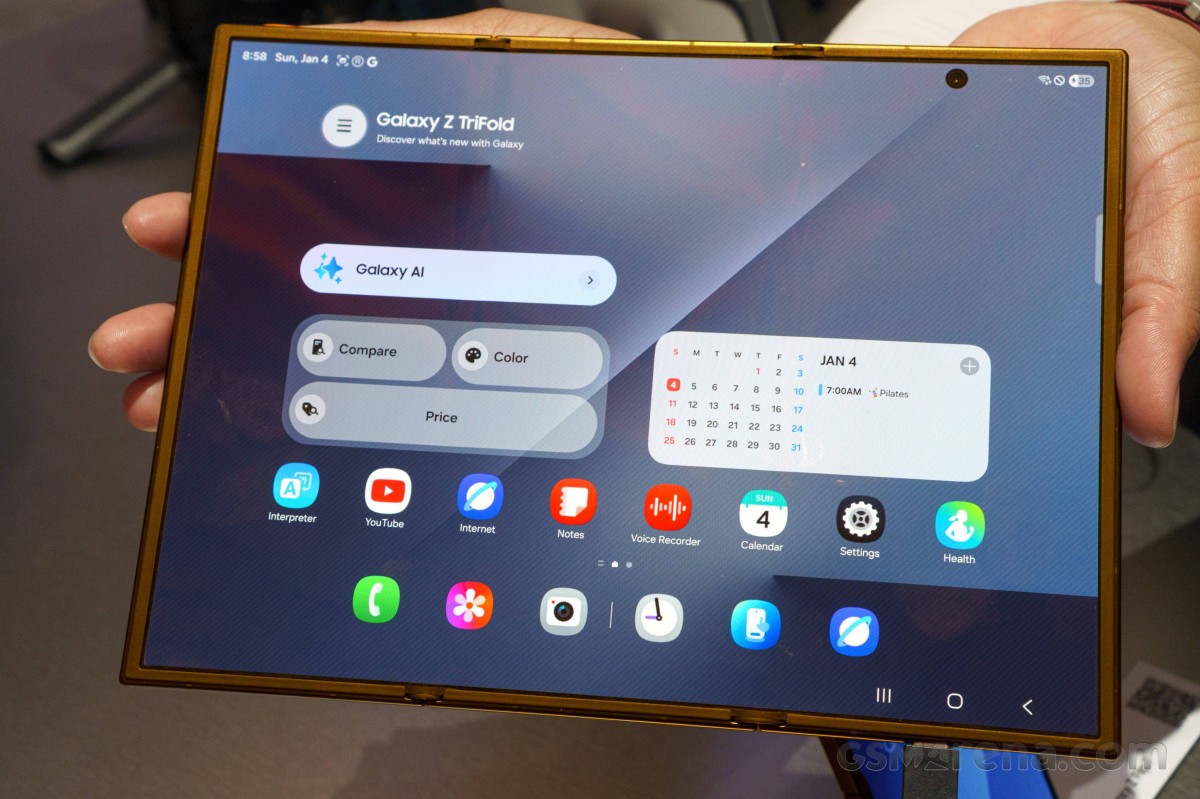
The Galaxy Z TriFold transforms into a 10-inch tablet when unfolded. Here, its three equal parts are impressively thin. The hinges feel very sturdy. But this shouldn’t come as a surprise in 2026.
An obvious benefit of the Galaxy Z TriFold, compared to the other trifold in the Huawei Mate XT Ultimate, is that the entire folding screen tucks into itself and isn’t exposed when the phone is fully folded.
You get a finger-enabled power button and a volume rocker on the right side.
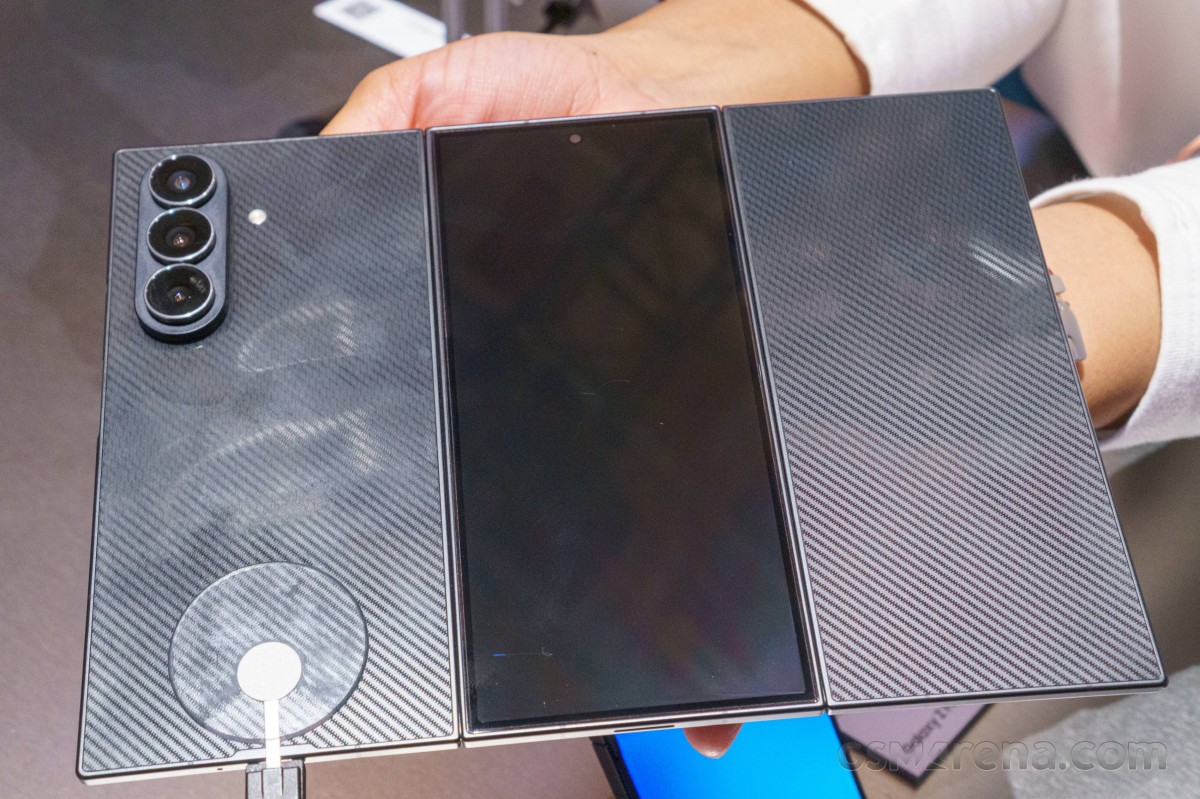
When you open up the Galaxy Z TriFold fully, the cover screen and the two rear panels are on the back. The panels have a carbon fibre texture under the surface, so they’re still glossy.
One thing you need to get used to is the proper way to close the TriFold. You open it to the left and close it from the right edge first. The phone will sound the alarm the moment you begin folding it back from the left though, so you’ll learn quickly.
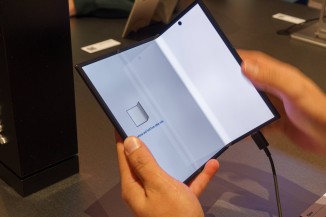
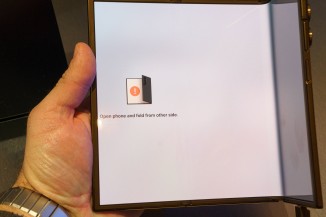
Don’t fold it the wrong way, now
The Galaxy Z TriFold isn’t comfortable to use with one hand due to its size and weight balance. At a little over 300 grams, it’s significantly heavier than the Galaxy Z Fold7 (215g).
You need to have both hands on the TriFold when you’re using it, unless you prop it on a table. And we’d expect most people will type on the split keyboard on the Galaxy Z TriFold.
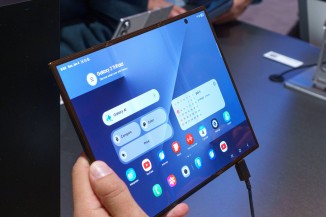
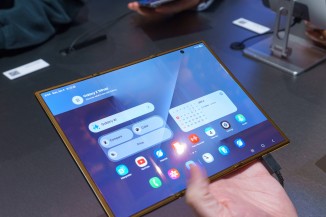
Tough to hold with one hand and use with the other
But all of the limitations of the Galaxy Z TriFold begin to fade from your mind the moment you watch a video on its 10-inch canvas. You use nearly the entire screen this way, unlike on the Galaxy Z Fold7, where the squareish aspect leads to huge bars.
So while 10 inches may sound close to the Fold7’s 8 inches, there’s a noticeable difference in usable screen estate.
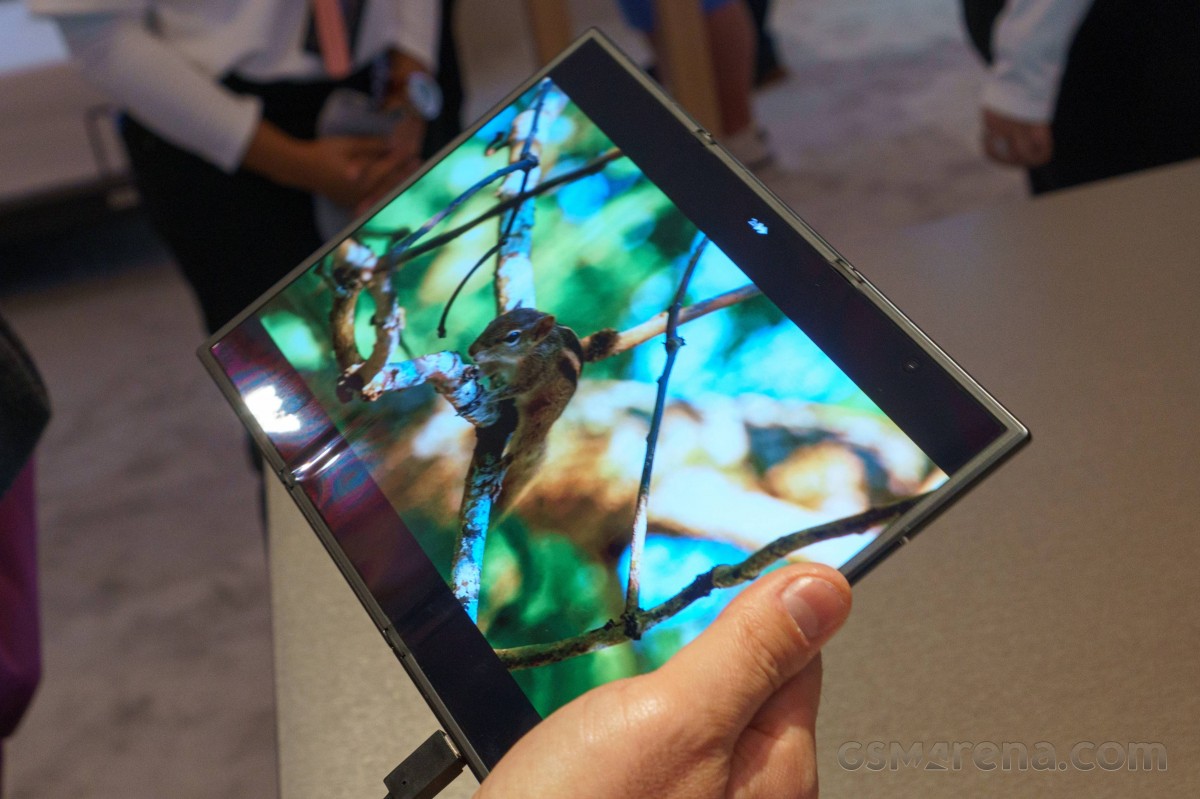
You can use the Galaxy Z TriFold in portrait orientation, too. So it becomes similar to a magazine. This way, it’s great for reading long pages.
This is very much a first look. We didn’t have much time with the Galaxy Z TriFold, and it was tethered during our hands-on. We’d love to get this thing in the office and through our review gauntlet to see all that it’s capable of.
But as a flex of engineering muscle, we love the Galaxy Z TriFold. In many ways, it feels just like a bigger Galaxy Z Fold7, which is a good thing! And there’s nothing wrong with lively competition in any mobile space!
