


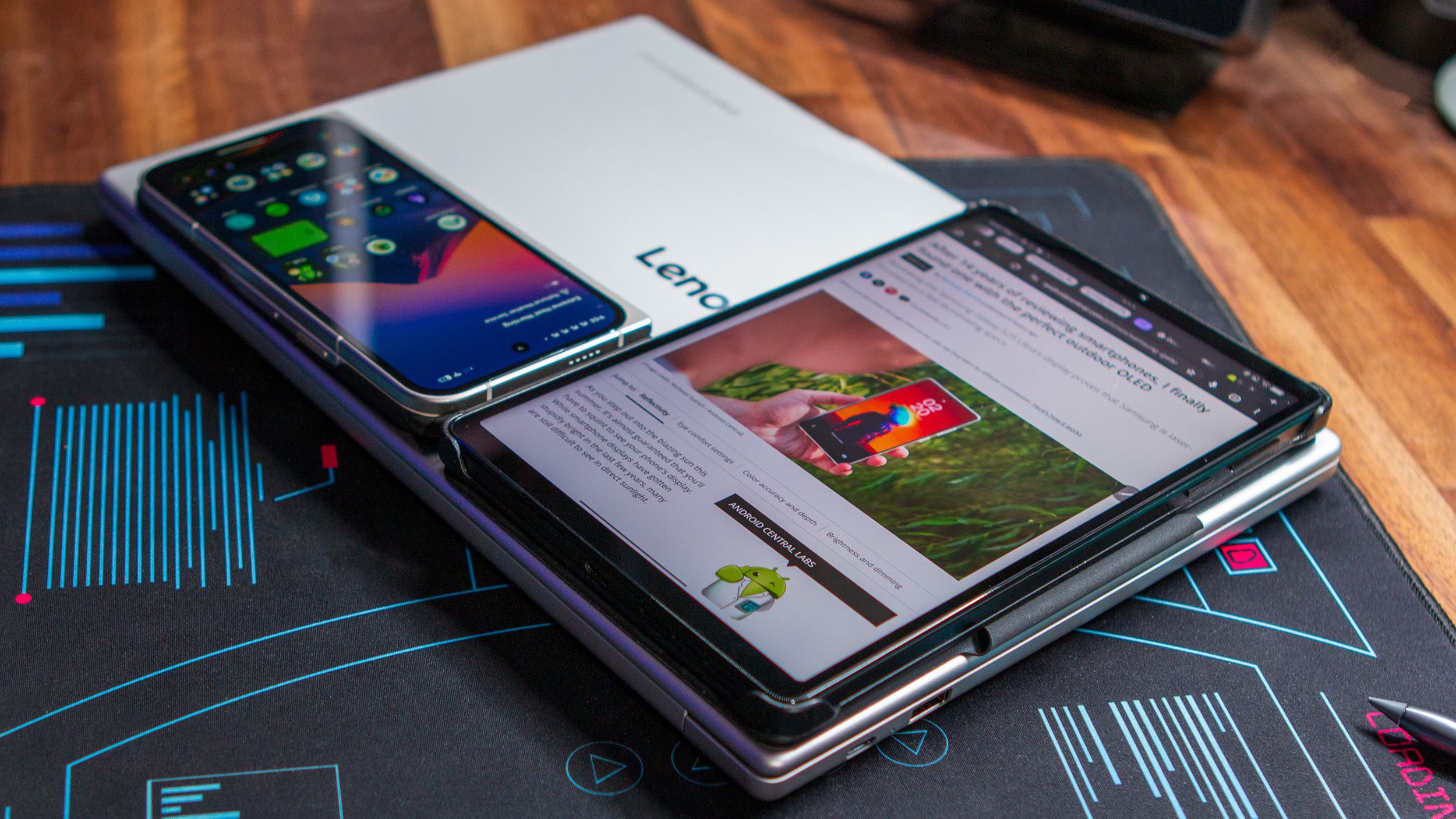
With 2026 rapidly approaching, it shouldn’t come as much of a surprise that we’ve been doing a lot of thinking about what the future holds. Not just because of the current global component shortage that’s wreaking havoc across the board, but also because it’s just how we do things around here for everything from phones and smartwatches to Chromebooks and tablets.
That being said, over the past year, we’ve seen a lot of ups and downs across the market. But it’s probably safe to say that Google and Qualcomm kind of put the whole market on a “pause” during Snapdragon Summit 2025. And no, I’m not just talking about Chromebooks or just talking about tablets, but both categories.
It’s not an “if,” but a “when”

I get the feeling we’ll soon see a merger between Android tablets and Chromebooks. I wrestle back and forth between it being an adaptation of Android 16’s Desktop Mode, a redesigned ChromeOS experience, or something else entirely.
There’s a non-zero chance I’m just overthinking things, and it’ll just be Android desktop mode, tuned for a laptop form factor. If Google takes this approach, it might be able to cut out much of the extra bloat that comes with providing both a mobile interface and a desktop-like one.

As a result, we could be looking at devices that are even faster and snappier than the current crop of Chromebooks and tablets. Plus, there is already evidence of Qualcomm adding support for Android 16, presumably for its Snapdragon X series of processors.
Seeing as MediaTek stole the show in 2025 by bringing the Kompanio Ultra to Chromebooks, this could be Qualcomm’s way of fighting back.
Chromebook, tablet, who cares. Just give me Google hardware

Given the current smattering of Chromebooks and tablets, Google’s only offering is the Pixel Tablet. The problem here is that the clock’s ticking, with the final major OS update arriving in mid-2026, before Google’s tablet is relegated to two and a half more years of nothing but security patches (and possibly Pixel Drops).
However, when the bombshell dropped at the Snapdragon Summit, there weren’t any mentions of a third party making the hardware behind Google’s Android laptop. Again, it’s probably a case of me borrowing Jerry Hildenbrand’s tinfoil hat for a minute (thanks, Jerry). But perhaps this new category of devices is what sparks Google to get back into the laptop hardware game.
I’ve been pretty vocal about wanting an upgraded Pixel Tablet, and even more vocal when it comes to the rumored Pixelbook 2. Instead of delivering either of those, Google might have just been playing the long game, waiting until the chips fell into place so it could do just that, but with this new software.
Chromebooks and tablets aren’t dead, or dying
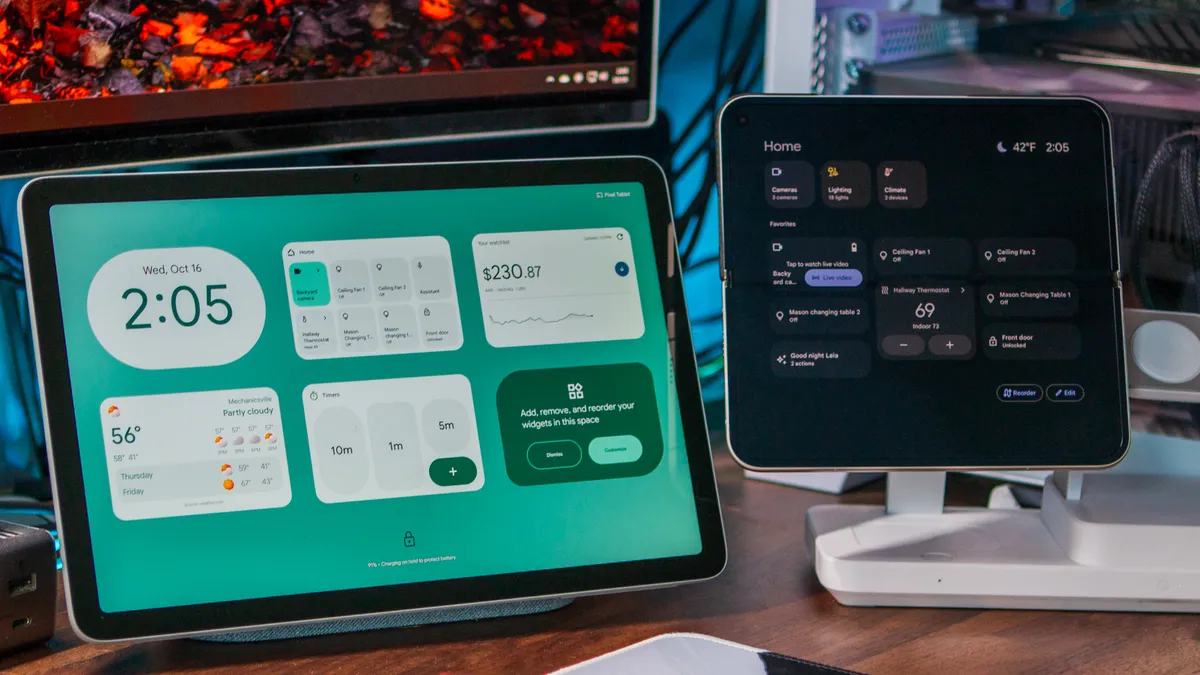
Regardless of the sensationalized headlines you might find yourself coming across, neither Chromebooks nor tablets is actually going anywhere. Even with the supposed Pixel Laptop expected to be debuted at some point in 2026, this will just be an additional hardware category, as opposed to being a replacement for an existing one.
“How can you be sure?” you might be asking. In November, a report from Omdia claimed that tablet shipments are up by more than 5% compared to 2023, with Chromebooks growing by about 3.1%. Arguably just as impressive is that tablets have continued to grow in popularity for “seven consecutive quarters.”
So not only is there still an apparent demand, but it may also indicate that the market is ready for something different. We’re already starting to see it with Android phones, courtesy of Samsung’s and Huawei’s new tri-foldable phones. Perhaps Google wants to perform one of its patented public product experiments.
As always, I want more

This time last year, I commented about how I wanted to see more compact flagship tablets. Although it didn’t come to fruition in the way I thought it might, we did see smaller powerhouse tablets such as the Legion Tab Gen 3, Lenovo Y700 (Gen 4), and RedMagic Astra. None of these options is larger than 9.06 inches, and two of the three are powered by the Snapdragon 8 Elite.
I hope to see this trend continue in 2026, as I’m also hoping some of those region-locked devices expand to North America (i.e. Lenovo’s Y700.) But more importantly, I’m keeping my fingers crossed that more companies enter the mix. It would be awesome to see Samsung release a flagship Android tablet in the footprint of the Galaxy Tab A9.

On the flip side of things, even with the Pixel Laptop thingamajig probably on the way, I’m still holding out hope for a Pixel Tablet 2. Hell, I’d be happy if it were nothing more than a spec bump, leaving everything else the same, including compatibility with the Charging Speaker Dock.
Or, at the very least, I hope Google will make a surprise announcement about a new smart home interface that will “replace” the Android build on the Pixel Tablet, extending its lifespan even further. It’s not like Google couldn’t do it. The Nest Hub and Nest Hub Max are powered by ancient processors, so a streamlined smart home-focused interface should breeze through requests and tasks.
Who the hell knows anymore
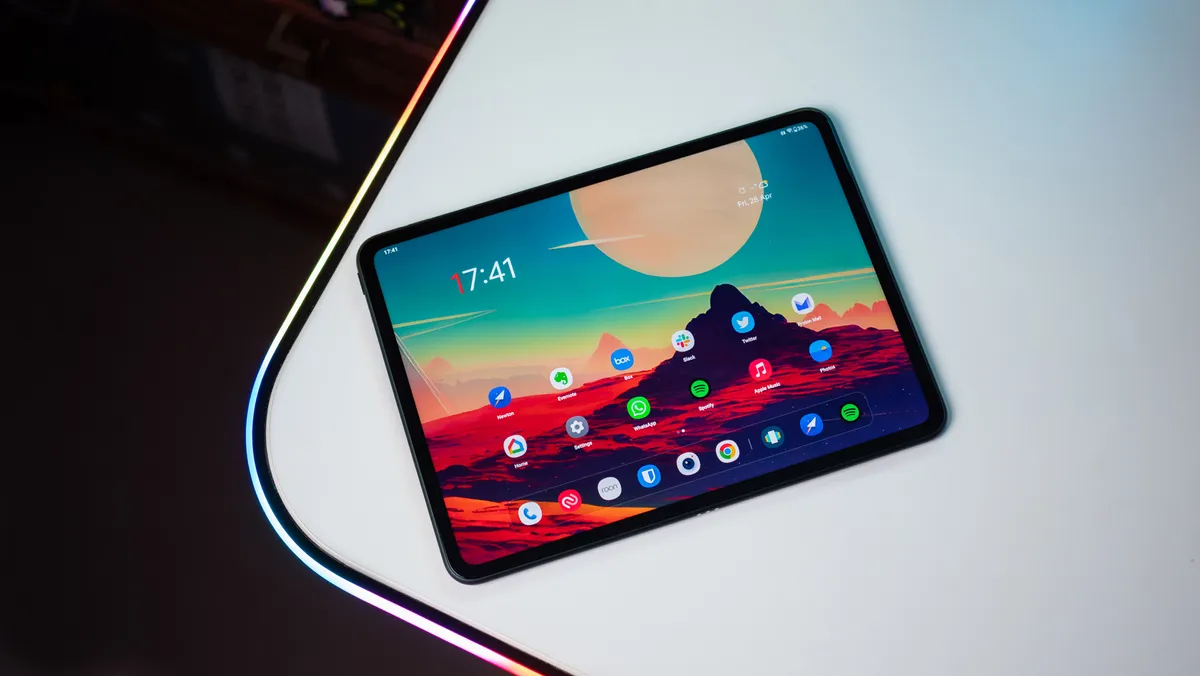
I can sit here and keep beating the drum about how Chromebooks and tablets can keep improving. But the truth is, I have no earthly idea what’s on the horizon. There is some concern about Google entering a new product category, potentially causing confusion in the ranks and throwing a wrench into everything.
We’ve been there before, and it wasn’t until long after the Chromebook Plus branding was introduced that some semblance of order was restored. That’s not to say I think this is what’s going to happen, but I do think that Google has to walk a tightrope if that’s the path it chooses to follow.
