


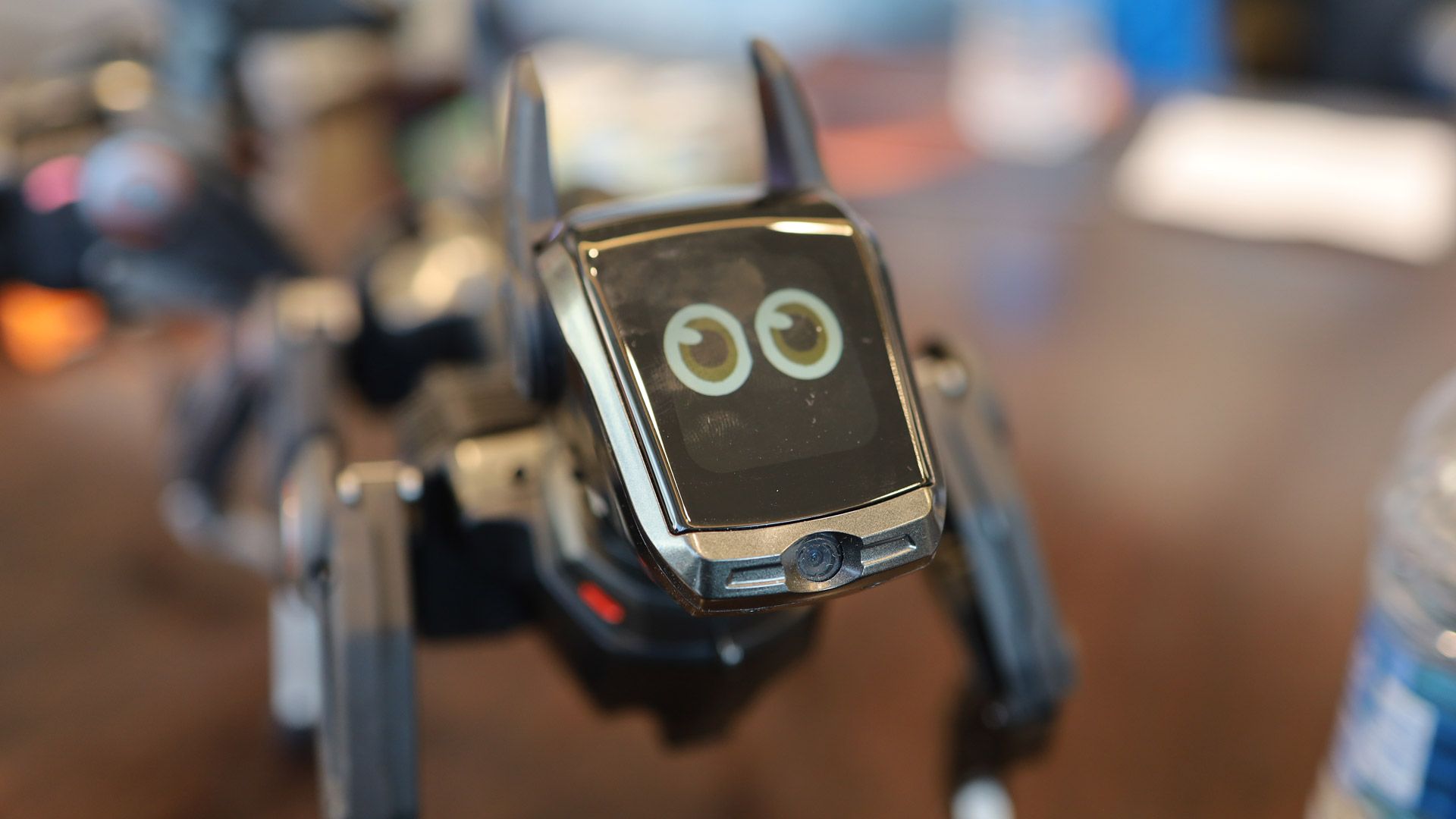
Hengbot Sirius robot dog looked up at me, and I reflexively petted its face, stroking down between the eyes as an on-screen menu appeared. This, in a nutshell, is Hengbot Sirius’s problem: it’s a robot AI dog that has consumer aspirations but is really almost entirely built for nerds and geeks.
Looking more like an X-ray of a dog than a real hound, Sirius can walk, bark, growl, dance, stand on its head, and fall over quite a bit like someone poured a bit of brandy into its water bowl.
Bite worse than its bark

I’d seen pictures, so I wasn’t too disappointed in the look, but there were other, less positive surprises.
The price is one. It’s around $700 on Kickstarter now, but it will be closer to $1,000 at retail.
It’s tiny, more chiuhahua than even a beagle.
It has 14 motors (or “actuators” in robot parlance), but the majority of them are devoted to the leg-to-body connection: (three per) and the head (two). The legs, which resemble those of Boston Dynamics’ Spot (they both end in rubber-ball feet), are actuator-free, relying on springs to stay taut. They may account for the shockingly high number of times Sirius fell over.
The 45-minute battery life was another, which is matched by how long it takes to charge. Real dogs will easily outlast it.
Also, there’s no self-charging. When it gets tired, you pick up the surprisingly heavy robo dog and plug in a USB-C cable.
There’s a dearth of touch sensors. Sirius has one on its head or screen face. And that’s it. You can rub its hard belly, but Sirius will never know. The face responds to strokes and taps, but you may also disconcertingly see the cute eyes replaced by a menu.

I raise all this because Hengbot Sirius enters the robot dog market as if it’s new and untouched by previous innovations. Even the cheapest robot dogs I’ve encountered offer at least two touch sensors. The pricier Sony Aibo is all but covered with them.
I pressed company execs on the looks and wondered why they didn’t at least try and make it cute and cuddly. It’s something they’ve considered but clearly have no immediate plans. I can’t see how this would be a viable robot companion for the fabric-covered 1X Neo Beta.
On the plus side, this is an AI-first robot that can accept voice commands and uses Amazon’s LLMs in the background to understand prompts and requests.
This dog could be smarter
Image 1 of 7


It also has cameras and can start to recognize its owner and use that AI and the interactions to build a unique personality, one that Hengbot will let you upload to the cloud if you need to download it to a new Sirius.
Sirius will also essentially launch open source and with a vibrant development community where you can upload and download routines.
We saw it perform some canned routines and even be remotely controlled via a PC. It can be cute and even endearing, but nothing it did wowed me.
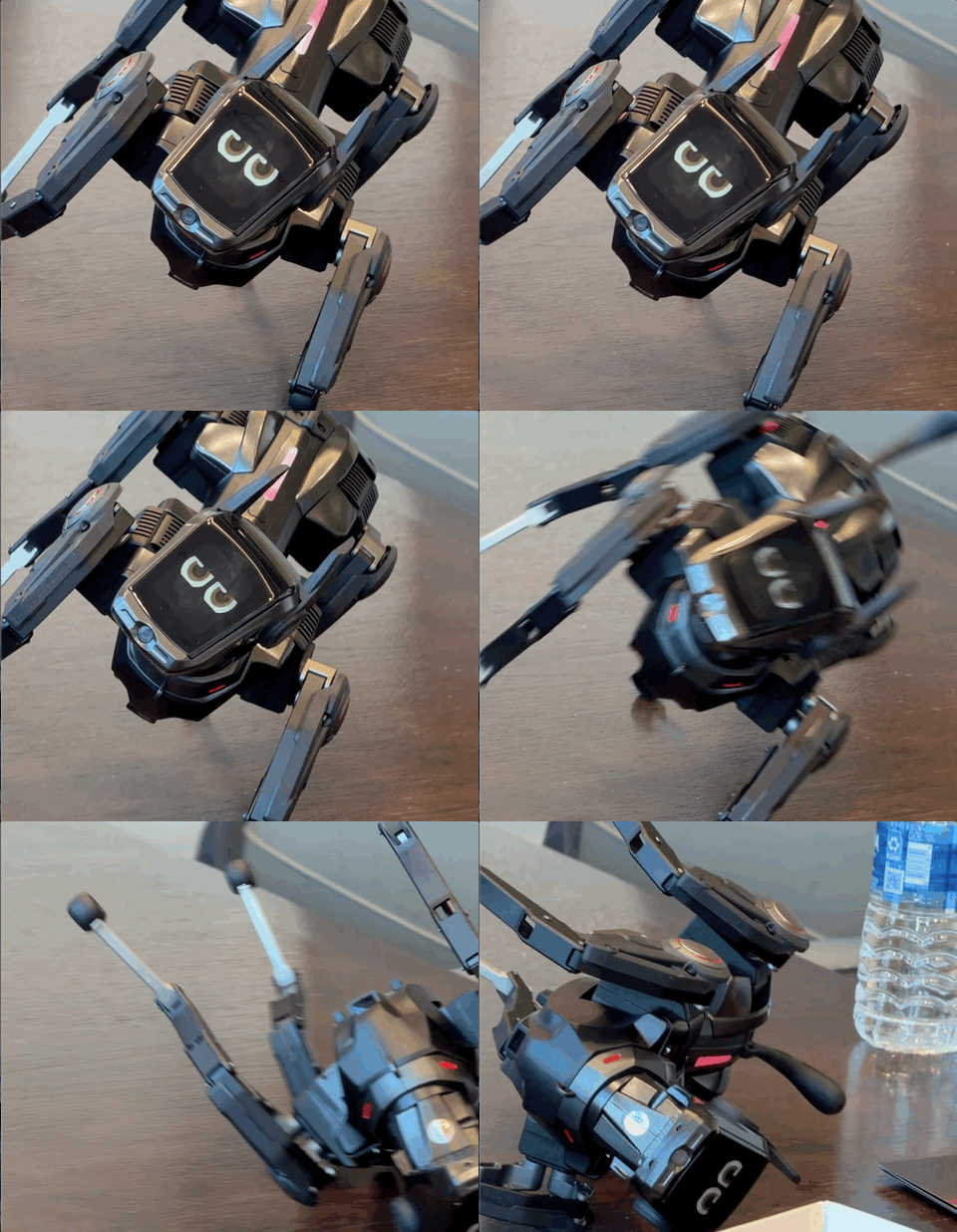
I picked it up and turned the robot dog over in my hands. It did not seem very kid-friendly, and according to the company, it has no IP rating, so if your kid tries to bathe it or even give it some water, Sirius might not survive.
I had hoped that as a modern robot dog with connectivity to the cloud and Amazon’s LLM, it might be plugged into at least one smart home platform, but Hengbot said there’s currently no support for Google Home, Amazon, or Apple Home.
That’s a shame, since robot dogs like this, which can bound about your home with a snout-mounted camera, can be semi-decent home security devices.
Ultimately, Hengbot Sirius is an expressive AI robot experiment. It will have a dev audience, but this is far from a consumer-friendly pup. Maybe version 2.

The best music players for all budgets
Follow TechRadar on Google News and add us as a preferred source to get our expert news, reviews, and opinion in your feeds. Make sure to click the Follow button!
And of course you can also Follow TechRadar on TikTok for news, reviews, unboxings in video form, and get regular updates from us on WhatsApp too.
