


Blackberry, Palm, Samsung, Nokia: these were the four horsemen of physical keyboards – but far from instilling dread, back in the day we all enjoyed a love affair with their varied yet wonderful feature-phone keyboards.
Arguably, no one did it better than Blackberry, and I was on my final Blackberry Storm when I made the switch to the iPhone 4. What followed were weeks, if not months, of me retraining my digits to type on imaginary keys, and not send friends and coworkers absolute gibberish.

Somehow, though, the hardware-based smartphone keyboard is making a comeback – or at least a whole lot of buzz. At CES, I saw Clicks Communicator and Clicks Power Keyboard. The latter is a Magsafe-ready powerbrick and physical keyboard add-on for iPhones, and it reminds me a bit of Ryan Seacrest’s ill-fated Typo keyboard case, which was just a tad too similar to Blackberry’s keyboard for, well, Blackberry’s taste.
The Clicks Power Keyboard also reminds me of a Blackberry keyboard; but with its ability to work with your iPhone, whether it’s in portrait or landscape mode, it’s clearly more versatile.

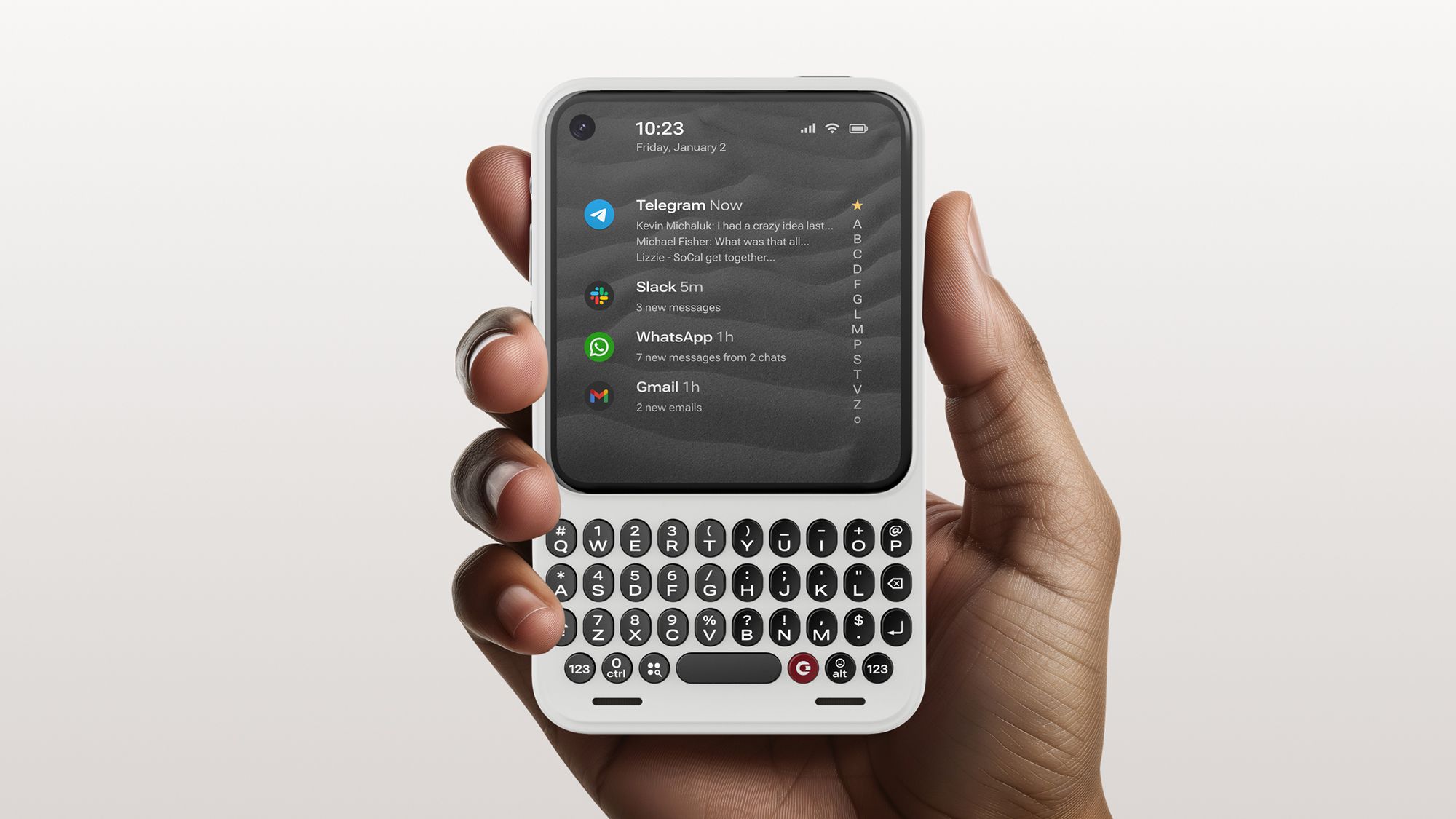
Even more interesting is the Clicks Communicator, a self-contained Android 16 phone with a smallish full-color screen and an ample keyboard – that’s the one that’s really turned people on. Now, in short order, they have another keyboard phone to consider, the Titan 2 Elite from Unihertz. Where the Clicks Communicator at least tries a more distinctive pill-shaped key design, Unihertz looks a lot like the iconic Blackberry Keyboard; somewhere, a patent lawyer is smiling.

I’m wondering: why this sudden fascination with hardware smartphone keyboards.
After all, Gen Z and Gen Alpha – the key market demographic at the dawn of the smartphone age – didn’t grow up didn’t grow up using physical keys. Even their laptop keyboard keys barely move. That said, those generations are obsessed with nostalgia and lo-fi tech. They like vinyl albums, tiny keychain cameras, film, retro game consoles, and even meet-cutes instead of Tinder.
It’s not just them, though. I’ve spoken to colleagues and contemporaries who are excited to own a Clicks Communicator. Even the guy who helped birth the product, MrMobile (A.K.A. Michael Fischer) has some flecks of gray in his hair.
Looking at you, Apple
If I had to choose a culprit for this wave of excitement over pressing physical keys to control a modern mobile OS, it would have to be Apple. Why is it, I wonder, that after nearly 20 generations of iPhones and iOS, I am worse at typing on the iPhone’s keyboard than ever?
Its predictive capabilities are often awful, and it doesn’t seem to be able to use AI to understand the intention of my fingers. I spend more time trying to fix my texting and email typos than I do composing messages.
I feel I’m not alone in this. I hear complaints about iOS 26 being buggy, and some of those center around the keyboard. Apple has not made the keyboard better – and I’m sorry, but QuickPath does not cut it for me.
I’ve done a fair amount of typing on Android, too, and it’s better, but not by much.
If Apple, Google, Samsung, and others can’t fix typing on in-screen keyboards, they may face a wave of defections to Clicks Communicator and other hardware keyboard alternatives.
There is another scenario, though. This could be a blip; momentary and short-lived nostalgia for typing days gone by. Most of the nostalgia tech waves supported by Gen Z and others do not result in the creation of massive new markets. They make some money, and then people go back to using what everyone else is using.
That may be the case here; but for now, let’s bask in the clicky fun of hardware keyboards, and enjoy the moment for as long as it lasts.
Follow TechRadar on Google News and add us as a preferred source to get our expert news, reviews, and opinion in your feeds. Make sure to click the Follow button!
And of course, you can also follow TechRadar on YouTube and TikTok for news, reviews, unboxings in video form, and get regular updates from us on WhatsApp too.
