


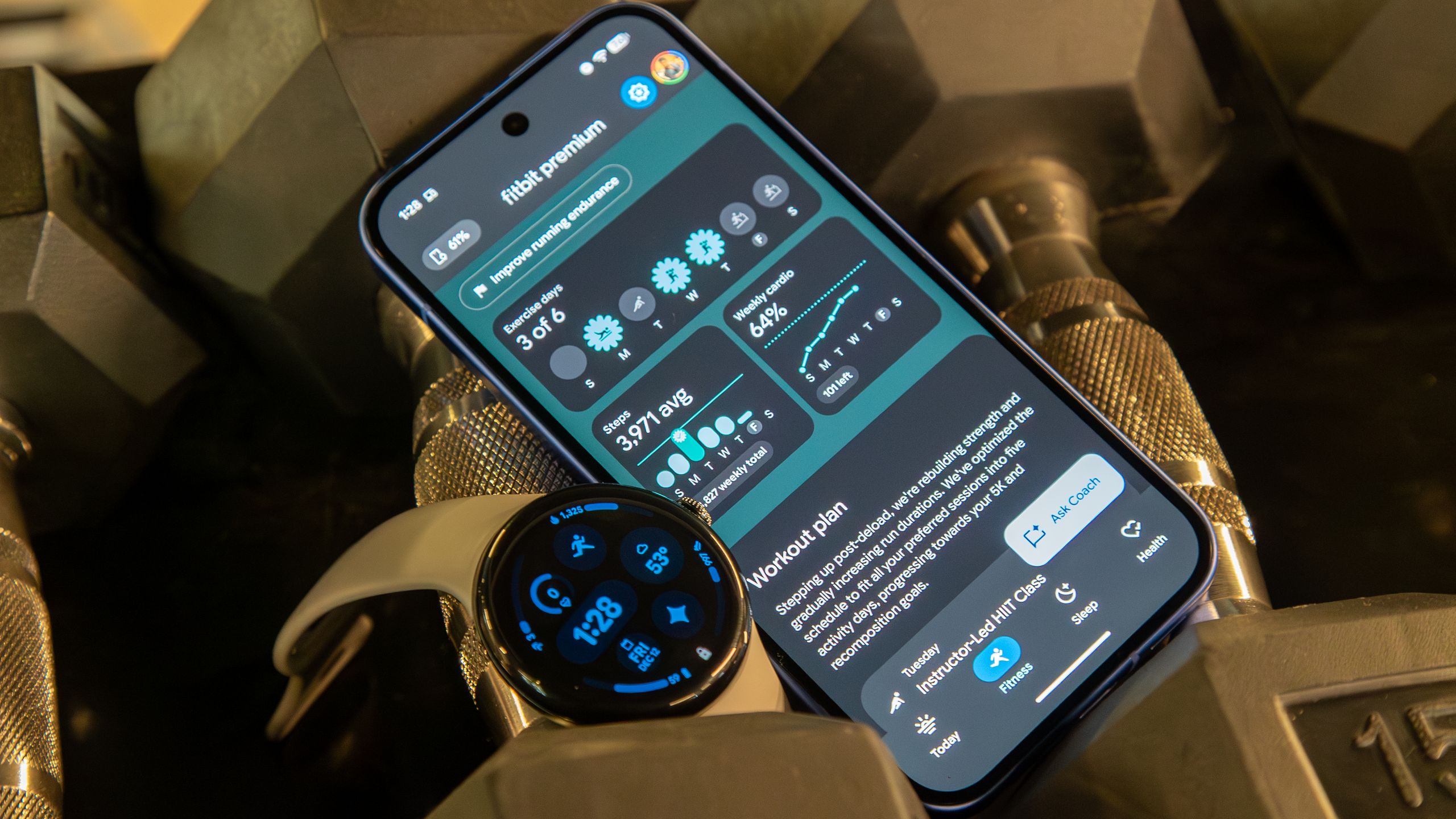
I recently looked back on my 2025 predictions for Android smartwatch brands like Google, Samsung, and OnePlus. I was more right than wrong, but now I’ll try to better predict how Android smartwatches will change in 2026.
It doesn’t take Nostradamus to say that the Pixel Watch 5 and Galaxy Watch 9 will launch in 2026. But aside from guessing what Google and Samsung have planned, I’ll talk about my expectations for Gemini, Fitbit, and Samsung Health, and the Wear OS platform more broadly, which has shown some warning signs this year.
Samsung could relaunch Samsung Health with a Galaxy AI subscription

Galaxy AI features like Energy Score, Vascular Load, and Antioxidant Index typically have fine print saying they’re free through 2025. That doesn’t mean Samsung will start invoicing us on January 1. Instead, anytime from Samsung’s CES 2026 “First Look” presentation to the Galaxy Watch 9 reveal next summer, it could announce an “optional” $10/month Samsung Health subscription and start cramming previously free features into it.
Samsung will want a flashy, AI-driven alternative to Fitbit Personal Health Coach; don’t be surprised if they charge us for it.
Google and Samsung will escalate their health war with Apple

Almost every major smartwatch brand is in a wellness arms race to pack as many “life-saving” or doctor-replacing features into their watches as possible, from Apple’s hypertension alerts and Google’s Loss of Pulse detection to Huawei’s blood pressure-tracking D2 watch. It should only ramp up in 2026.
Samsung has already confirmed plans to use Galaxy Watches to detect heart failure, a “World-First” feature, very soon. Google launched its six-month hypertension study with Fitbit Labs for Pixel Watch 3 owners, so in theory, it could use that data to develop its own predictive feature for high blood pressure warnings.
Google’s clinical lead for cardiology told me she wants Pixel Watch users to have more access to “personalized risk” data, tying your stats and medical records to clinical studies. And Google’s clinical sleep lead says he hopes smartwatches can one day detect signs of sleepwalking or Restless Leg Syndrome.
I’m not saying we’ll see these in 2026, just showcasing the doctors behind these Android watch brands with ambitious goals for personalized health. Samsung clearly has the same medical aspirations, too.
Wear OS will continue to shed its “open platform” label

By my count, Wear OS has four active brands remaining: Google, Samsung, OnePlus/OPPO, and Xiaomi. I’d guess that Xiaomi or OnePlus will be the next to quietly distance itself from Wear OS, releasing more watches with proprietary software, such as the OnePlus Watch Lite running an RTOS.
Whether by design or neglect, Google’s non-Samsung partners can’t keep up on Wear OS version updates, falling a year behind on average, and that makes their watches seem deficient compared to Pixel and Galaxy Watches. I’m still expecting a OnePlus Watch 4 until I’m told otherwise, but we’re trending toward Google and Samsung hoarding Gemini on smartwatches for themselves.
Gemini upgrades will be the Wear OS 7 highlight

Instead, I think Wear OS 7 will focus on AI upgrades. Wear OS 6’s on-watch smart replies — recently enhanced on Wear OS 6.1 — are the template. The idea is to shift more work away from your phone, so the AI assistant can answer questions more quickly without relying on the cloud.
I wonder if we’ll get an official Gemini Live tool on Wear OS, for situations where it’s not convenient to have your phone on hand. I could also see Google creating a Gemini equivalent to Apple’s Workout Buddy, synced to your Fitbit training plan; it would give you real-time, personalized feedback and advice during an activity.
Next-generation hardware
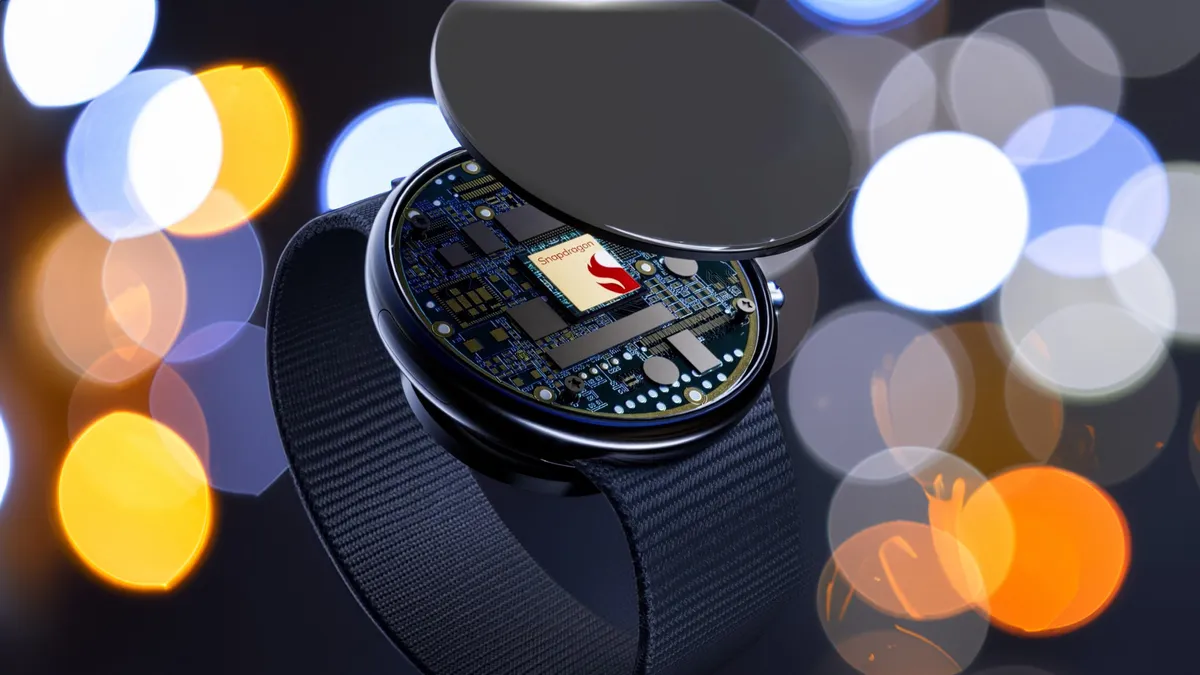
One of my big hopes for 2025 was a powerful Snapdragon W5 Gen 2 SoC with RISC-V architecture, based on an interview with a Qualcomm VP where he mentioned their goal of making “AI-driven” hardware with a “week’s worth of battery life” and the ability to support years of updates.
Instead, the Gen-2 chip we got was a more incremental upgrade, focused on improved efficiency and satellite connectivity. It’s perfectly functional, but not especially fast, even for everyday app and menu loading. Samsung’s 3nm Exynos W1000 is more advanced for everyday performance, but I wouldn’t count on it for next-gen AI capabilities, either.
The sooner we get a true next-generation smartwatch chip with the neural processing for powerful on-watch AI, the happier I’ll be. Maybe Google could even make a Tensor chip with stronger neural performance, as one leak suggested. I just don’t expect a hardware change so soon, given how often smartwatches keep the same chipsets for years.
A more exciting Galaxy Watch Ultra 2

While the Galaxy Watch Ultra (2025) was a minor refresh, Galaxy Club claims Samsung is developing a new flagship watch for 2026. It didn’t share other details, except for its internal name “Galaxy Watch 9 Ultra.” Whatever it’s called, Samsung needs to make the Ultra 2 much more exciting to justify the $650 price tag, now that cheaper Galaxy Watches have stolen its look.
For one, I’d demand a battery boost: The 590mAh capacity hasn’t changed since the Watch 5 Pro, and the OnePlus Watch 3 lasts nearly twice as long. For another, LTE alone isn’t that exciting when the Apple Watch Ultra 3 has 5G and satellite connectivity. If its MicroLED tech isn’t ready for a smartwatch, Samsung still needs to give the Ultra 2 display something to stand out, like a higher PPI ratio.
Ultra watches are meant for the outdoors, but the Galaxy Watch Ultra never really delivered the training software necessary to attract athletes; anyone willing to spend $650 would spend even more on a Garmin Fenix 8. Samsung started off with a Running Coach this year, but it needs to do more to keep pace with Apple and Google/ Fitbit, instead of relying on third-party fitness tools like iFit.
Upgrade the Pixel Watch 5 to match the new Fitbit Coach

If lightweight Garmin watches can sync workout plans from the Connect app and automatically track exercise reps, I’d assume Google can do the same with more powerful Snapdragon hardware! It’s just a matter of implementing Fitbit Coach’s plans and insights directly in Wear OS 7.
I’ve also waited for years for Google to offer a Google Maps course creation tool, where you build a route, export it as a GPX file to your Pixel Watch, and then follow it during a run, hike, or bike activity. The Galaxy Watch Ultra can import GPX files from other apps; Google could one-up Samsung by actually letting you create them.
A OnePlus Watch 4 with its own software surprises

For OnePlus, 2025 was all about hardware upgrades. Compared to the Watch 2, the Watch 3 added a titanium bezel, a working crown, a denser silicone-carbon battery, a larger and brighter display, an upgraded coprocessor with better background task performance, and two new health sensors. It essentially caught up with other premium smartwatches.
Ignoring my Wear OS pessimism and assuming a OnePlus Watch 4 is coming in a couple of months, I don’t need more hardware upgrades, really. I just want to see if OnePlus’s spin on Wear OS 6 has a standout feature, compared to Google’s Material 3 Expressive and watch face theming, or Samsung’s phone-like multi-info Tiles.
