


Android’s earthquake alerts got a real-world test in Venezuela
Millions of people in Venezuela received earthquake warnings on their Android phones seconds before powerful earthquakes struck, offering a glimpse of how smartphones are becoming an emergency warning network in places without dedicated seismic infrastructure.
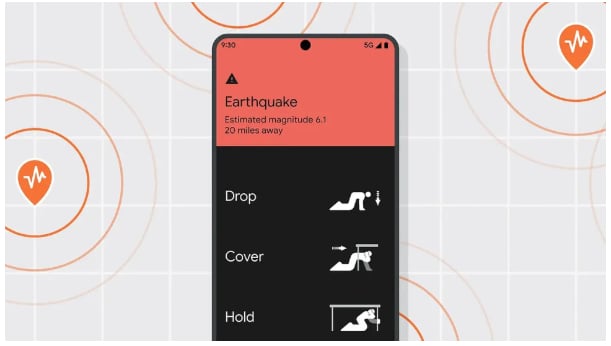
The alerts came from Google’s Android Earthquake Alerts system, which uses the accelerometers already built into Android smartphones to detect the first signs of an earthquake after it begins. The system then analyzes signals from many nearby devices, estimates the earthquake’s location and strength, and pushes warnings before the slower, more destructive seismic waves arrive.
According to Google, the Venezuela event reached about 11.4 million people with alerts, including nearly 1.4 million of its highest-priority “Take Action” warnings. Depending on their distance from the epicenter, users received anywhere from a few seconds to as much as two minutes of advance notice.
How the system worked
The two earthquakes, measured at magnitudes 7.2 and 7.5, struck beneath northern Venezuela, a country that does not operate its own national earthquake early warning system.
Google said stationary Android phones detected the first fast-moving primary (P) waves within about three seconds of the earthquake beginning underground. Roughly six seconds later, the company’s servers had confirmed the event and issued the first alerts. As additional data arrived and the second earthquake occurred, the warning area expanded to cover more regions, including Caracas, The New York Times reported.
Google principal engineer Marc Stogaitis explained that the system interpreted the overlapping seismic waves from both earthquakes as a single large event.
“As the seismic waves from both events overlapped with each other, the system treated it as a single large event alerting those experiencing shaking from both events,” Stogaitis told The New York Times. The alerts do not predict earthquakes before they happen. Instead, they detect earthquakes immediately after rupture begins and race electronic warnings ahead of the slower-moving destructive waves.
A growing global safety network
Google says Android Earthquake Alerts has expanded rapidly since its launch of crowdsourced detection in New Zealand and Greece in 2021. The service is now available in 98 countries.
According to research published in Sciencethe platform has detected more than 18,000 earthquakes ranging from magnitude 1.9 to 7.8. More than 2,000 earthquakes generated public alerts, resulting in roughly 790 million notifications sent worldwide.
The company estimates the system has increased global access to earthquake early warning from around 250 million people in 2019 to approximately 2.5 billion today. Google also says it has steadily improved the system’s accuracy by refining its earthquake magnitude estimates.
The median error of its initial magnitude estimates has fallen from 0.50 to 0.25 over the past three years, bringing its performance closer to that of traditional seismic monitoring networks.
More Google coverage
Why it matters
The earthquakes in Venezuela highlighted the value of smartphone-based warning systems in countries that lack expensive networks of dedicated seismic sensors.
While nations such as Japan, Mexico, and the United States operate government-run earthquake warning systems, many earthquake-prone regions do not. Google’s approach turns billions of existing Android devices into a distributed detection network, allowing warnings to be delivered without building new sensor infrastructure.
For consumers, even a few seconds of notice can provide enough time to move away from hazards or follow the recommended “Drop, Cover, and Hold On” safety procedure before severe shaking begins.
Powerful, but not perfect
The Venezuela event demonstrates both the promise and the limitations of smartphone-based earthquake detection. Google’s platform dramatically expands access to early warnings by leveraging the hardware people already carry, making it particularly valuable in regions without public warning infrastructure.
However, the technology is not a replacement for national emergency systems.
Phones must be stationary to detect seismic activity; users need Android Earthquake Alerts and location services enabled with network connectivity, and people closest to an earthquake may receive little or no warning because the destructive waves arrive almost immediately.
The system also detects earthquakes after they begin rather than predicting them, making public understanding of its capabilities essential for maintaining trust and encouraging appropriate responses.
Venezuela showed that earthquake warnings no longer have to depend only on expensive seismic networks. In some places, the first warning may come from the phone already sitting on the table.
Also read: Android 17 caused Pixel touchscreen issues for some users, including reversed scrolling, missed taps, and unresponsive screen areas.