



ZDNET key takeaways
- elementaryOS 8.1 brings more polish to brilliant OS.
- This release is all about security, multitasking, and app management.
- Currently in beta, there’s no indication on when the release will be made public.
When I received word from Danielle Foré, Founder & CEO of elementaryOS, that the beta version of 8.1 was available, you can bet I downloaded the ISO immediately and installed it.
According to the official release notes, the team focused on three primary goals:
- Following through on OS 8 release goals
- Improving Support for Your Devices
- Addressing Your Feedback with over 1,100 issue reports fixed
With this latest update, they’ve made certain additions/modifications that make the OS better than ever.
Let’s talk about what’s new.
Security
Let’s first take a look at what features improve the security of elementaryOS.
Back when the team released version 8, they added Secure Session (thanks to Wayland), which ensures that applications respect your privacy. This feature works by requiring all applications must obtain explicit permission before they are allowed to access system features, such as monitoring keystrokes or taking screenshots.
elementaryOS 8.1 gives you granular control over permissions.
Jack Wallen/ZDNET
Back in the initial release, the Classic Session was the default. With version 8.1, Secure Session has now become the default, to improve the security of your desktop. With developers and hardware vendors offering better Wayland support, Secure Session now supports a broader range of modern hardware features.
Also: My idea for a beginner-friendly Linux distribution
Another very important addition is that when an app or service requires sudo authentication, everything but the password prompt is dimmed and inaccessible. By doing this, you can be certain that only legitimate system dialogs are asking you to type your password. This ensures that an malicious app isn’t trying to read your password.
This is a necessary improvement to help beef up security.
Jack Wallen/ZDNET
Multitasking & window management
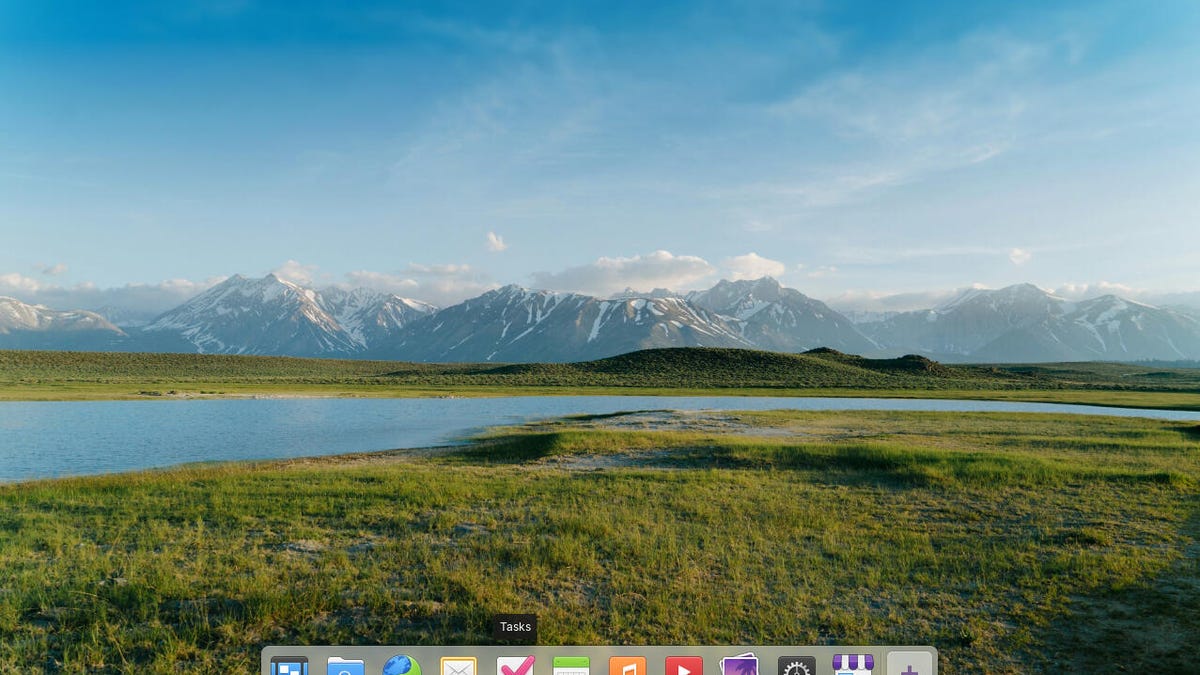
When elementaryOS 8 was released, certain fan-favorite features were removed from the Dock (Dock replaced Plank). With 8.1, some of those features have returned. You’ll now see multiple dots for apps with multiple windows open on the desktop. Those dots also have a color code, depending on which workspace they are running in.
Via the Background Portal, the Dock can now list apps that are running in the background without a window. From within System Settings, you can determine what apps are allowed to run in the background, as well as advanced system access.
Also: The 5 best Linux distros for beginners
Another handy addition is a + button at the right edge of the Dock. Click that button and to open a new workspace or select an existing workspace. To create a new workspace use either the Super + End or Super + 0 key combinations. You can also drag and drop to rearrange workspaces at will and launch applications from the Dock directly into Multitaskinve View.
Multitasking is even easier in elementaryOS 8.1.
Jack Wallen/ZDNET
You can also now enable hotcorners, even while an app is full screen. This is taken care of in System Settings > Desktop > Multitasking.
App Management
Back in elementaryOS 8.0, the developers added Flathub into App Center, which meant users could then install proprietary apps like Slack or Spotify (and others). With 8.1, all apps now show a percentage-based app rating in the App Center. The app ratings are drawn from the same ratings server used by the likes of GNOME Software.
The team has also added support for app addons, and when a game supports playing with controllers. You’ll also find an improved license listening for apps, which shows more details and even links for when developers encourage users to get involved. The developers have also changed the action button label from “Free” to “Install” to avoid any confusion. Apps also now list if they include in-app purchases.
Also: 10 lessons I’ve learned from the open-source community that aren’t about tech
Finally, another important update to app management is that the upgrading of apps and system have been split apart. App updates are still handled within the App Center, but system updates are now taken care of in System Setttings > System. You’ll also find more information listed in this location to help keep you more in the know (such as showing how large an update is).
elementaryOS has been an elegant and user-friendly Linux distribution for some time, but with the release of 8.1 beta, it proves that the development team can still bring the magic while always taking user feedback seriously.
Miscellaneous improvements
- elementaryOS now runs on ARM64 devices.
- Fractional scaling is now available in the Secure Session.
- Better stylus detection in Wacom settings.
- A redesigned Bluetooth Settings window.
- Airplane Mode no longer disables Bluetooth.
- Keyboard focus indicators now vanish when not in use.
- It’s now possible to directly deny access for apps to send notification bubbles.
- A new setting for if a network should be automatically connected.
- New default apps for system monitoring and maps.
You can read more of the details for version 8.1 in the official release announcement and if you want to test 8.1, you can download it from the official site.
Also: The best Linux distros for beginners in 2025 make switching from MacOS or Windows so easy
