


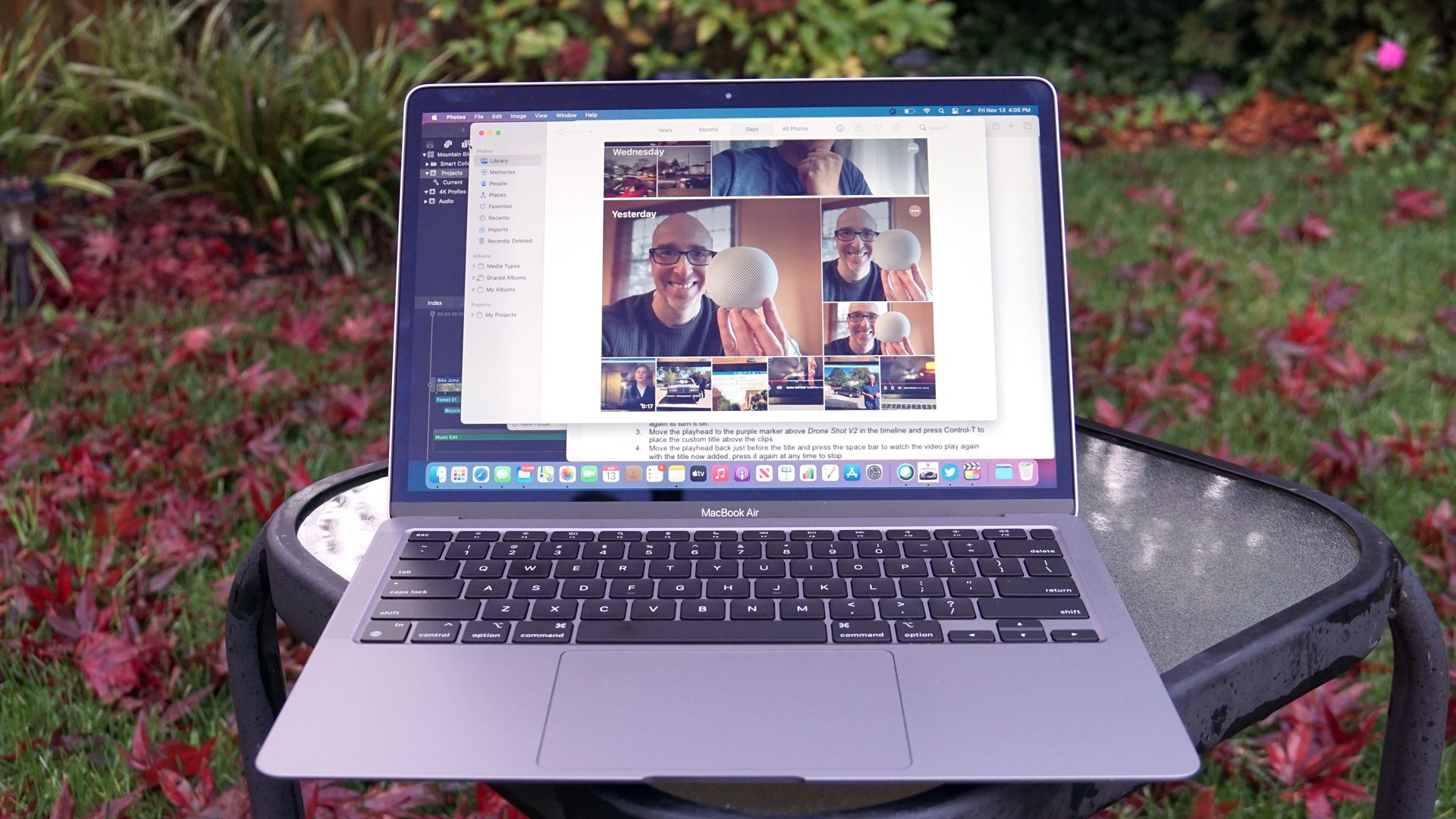
Five years ago, I unboxed and reviewed my first Apple Silicon laptop, the MacBook Air M1. That laptop and SoC would change the course of laptop history, especially MacBook history, and my own computing experience.
It all started, though, with the announcement.
It’s been five breakneck years since Apple unveiled Apple silicon during its first virtual WWDC keynote amid a global pandemic. Even without the visceral on-stage moment of CEO Tim Cook emerging from the shadows to unveil a huge helping of Apple platform excitement, this was momentous.
“One world, one universe, one platform, unification. Apple’s momentous Worldwide Developer’s Conference keynote just painted a picture of a world in which the walls come down and, from the silicon underneath to the pixels in front of your face, Apple’s ecosystem becomes one.”
What Apple Silicon will bring to the Mac. #WWDC20 #WWDC2020 pic.twitter.com/oqJ4MtG8zVJune 22, 2020
Apple switching hardware platforms was not unheard of – after all, only 14 years earlier, it had migrated its systems from IBM and Motorola’s PowerPC to Intel.
This time, though, was different. Like an ‘A’ student preparing for finals, Apple was deeply prepped for this new transition. It used XCode to rewrite all its first-party apps, and worked with major partners like Microsoft and Adobe to ensure that core third-party apps were able to run on the revolutionary new hardware. There was even a Developers Transition Kit ready to go for app partners.
Rosetta 2, a software compatibility layer, was also released, promising to ease the transition for non-Arm-ready apps.
Silicon promise

Back then, I was well aware of the potential benefits of a five-nanometer, power-saving platform. It was the holy grail of mobile computing, one that Microsoft had already approached, though less successfully, with Windows on Arm in the Surface X Pro, which ran on the SQ2 chip.
Apple silicon would transform MacBooks from decent battery performers to 17-hour marathoners. I had my concerns about the integrated graphics, but also knew that graphics performance on Apple’s bespoke A-series chips on the iPhone and iPad was always stellar, so I also had reason for hope.
I saw the potential, writing, “What Apple’s doing is switching all its systems from running on a variety of fuels, like wind, solar, and gas, to just one that might arguably be described as rocket fuel.”
And yet, I had no intention of switching from Windows to Mac.
I had my reasons
It’s not that I was unfamiliar with the Mac. I’d used the OG Macintosh in the 1980s but switched for good to Windows when I joined PCMag in the early 1990s.
Windows was for me like an old but beloved car. It could be clunky and even sometimes break down in the middle of the road, but I knew every control and contour. It molded to me, and I, a bit, to it. I knew its foibles, but also knew how to work around them. That no Windows laptop could ever give me more than five hours of battery life (on a good day) was something I accepted, along with the fact that I felt like the blue screen of death was always lurking around some unforeseen corner.
Barely five months after the announcement, and developers got their hands on the transition kit, which, among other things, helped them build Universal apps for all systems running Apple silicon. I reviewed the first Apple MacBook Air with the M1 chip. I called it “an astonishing breakthrough.”
Benchmarks made a mockery of even Intel Core i7 systems, especially in the area of integrated graphics. Battery life was incredible, ranging between 15 and 20 hours. I knew, intuitively, that such a system could transform my life.
Even so, the idea of switching from Windows to macOS (the operating system Macs run) was daunting. I think I worried that, with time, I might discover that most of my key apps didn’t work on Apple silicon or that Apple wouldn’t meet its two-year deadline of fully transitioning away from Intel, and that it might even abandon the project altogether and return to Intel.
I needn’t have worried. By 2023, even the Mac Pro had switched to an M2 Ultra. I was impressed with Apple’s innovative approach to producing ever more powerful Apple silicon chips, often by clustering them together (the M2 Ultra really is two M2 Max chips). What’s more, I never found an app that wouldn’t run on Apple silicon.
Making the change and what might have been

Three years into the Apple silicon journey, I switched to the M2 MacBook Air and documented the effort in a journal. There were some struggles, but almost all of them revolved around long-standing differences between macOS and Windows. I was forced to learn many new keyboard commands and shortcuts.
Two weeks into my journey, I wrote:
“Becoming second nature to use the Mac. Will I ever go back?”
Spoiler alert: I never did.
If Apple had failed to deliver on the Apple silicon promise it made on June 22, 2020, this would’ve been a different story (one that might more closely resemble Apple Intelligence). The fact that it made the effort early on to make the hard stuff look easy (supporting all those apps, making different platform apps work on different systems, making it rock-solid stable, and providing industry-leading efficiency) put the wind at Apple silicon’s back. Apple showed immediate commitment by unveiling the MacBook Air M1, along with an iMac and a Mac Mini in those first six months.
Apple has never looked back and continues to build and innovate on the Apple silicon platform to deliver more powerful mobile CPUs. It’s only in the last year or so that, with the help of Qualcomm, the Windows world has started to catch up, nearly matching Apple silicon in performance, efficiency, and stability.
Apple silicon changed the computing world, but it also changed me. I walked away from a platform I loved (and still have affection for) and have not looked back. Apple’s market share has grown on the back of Apple silicon, and, and least in that Mac space, I think the best is yet to come.
Follow TechRadar on Google News and add us as a preferred source to get our expert news, reviews, and opinion in your feeds. Make sure to click the Follow button!
And of course you can also Follow TechRadar on TikTok for news, reviews, unboxings in video form, and get regular updates from us on WhatsApp too.
